
Sugar-Free 2-Ingredient Chocolate Peanut Butter Mousse
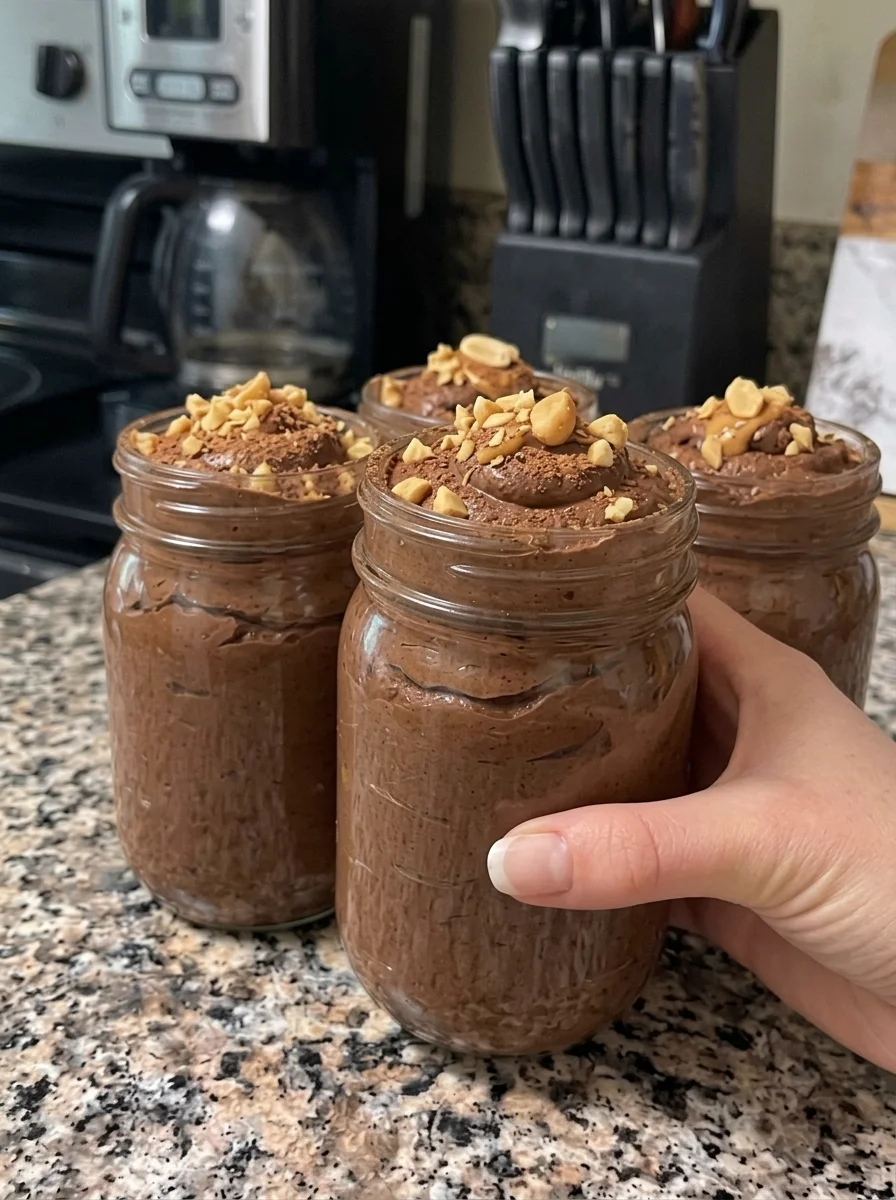
Creamy peanut butter and unsweetened cocoa come together in this simple chocolate dessert. There is no baking, melting chocolate, or whipping cream required: stir the ingredients together, portion into small cups, and chill briefly if you prefer a firmer consistency.
The flavor is bold and unsweetened. Peanut butter supplies richness and a mild natural sweetness, while cocoa adds a dark chocolate note. This is a good fit for someone who enjoys the taste of unsweetened cocoa and peanuts rather than expecting the sweetness of a chocolate peanut butter cup.
Although often called a two-ingredient mousse, the mixture is dense and spread-like rather than airy. Mixing these ingredients does not create a whipped mousse structure. Serve small portions, and let a refrigerator-cold serving soften briefly if it becomes too firm to spoon easily.
Recipe at a Glance
- Prep time: 5 minutes
- Optional chilling: 20–30 minutes
- Total time: 5 minutes without chilling, or 25–35 minutes with chilling
- Yield: Approximately ½ cup of dense chocolate peanut butter mixture
- Suggested portions: 4 small portions, or 2 larger, rich portions
- Equipment: Bowl, spoon or small whisk, spatula, and small serving dishes
Why You’ll Love This Recipe
- Two basic ingredients: Unsweetened peanut butter and cocoa powder.
- No baking: A little stirring is the main preparation.
- Rich chocolate flavor: Cocoa gives a dark, slightly bitter finish.
- Easy portioning: Small servings suit the concentrated richness.
- Flexible use: Enjoy by the spoonful or spread a little onto a suitable accompaniment.
- No added sugar in the base: Choose products whose labels confirm that no sugar has been added.
Is It Sugar-Free or No Added Sugar?
The supplied title calls this sugar-free, but no added sugar is the more accurate general description. Peanuts naturally contain some sugar, and cocoa can contribute small amounts too. Choosing unsweetened products does not automatically make the finished dessert entirely free of sugar.
Check both ingredient lists and nutrition labels. Peanut butter made from peanuts alone, or peanuts and salt, avoids added sugar. Cocoa should be unsweetened baking cocoa rather than sweetened hot chocolate mix.
This recipe also contains carbohydrates and a substantial amount of fat. Neither a short ingredient list nor the absence of added sugar means a dessert is low in calories.
Ingredients
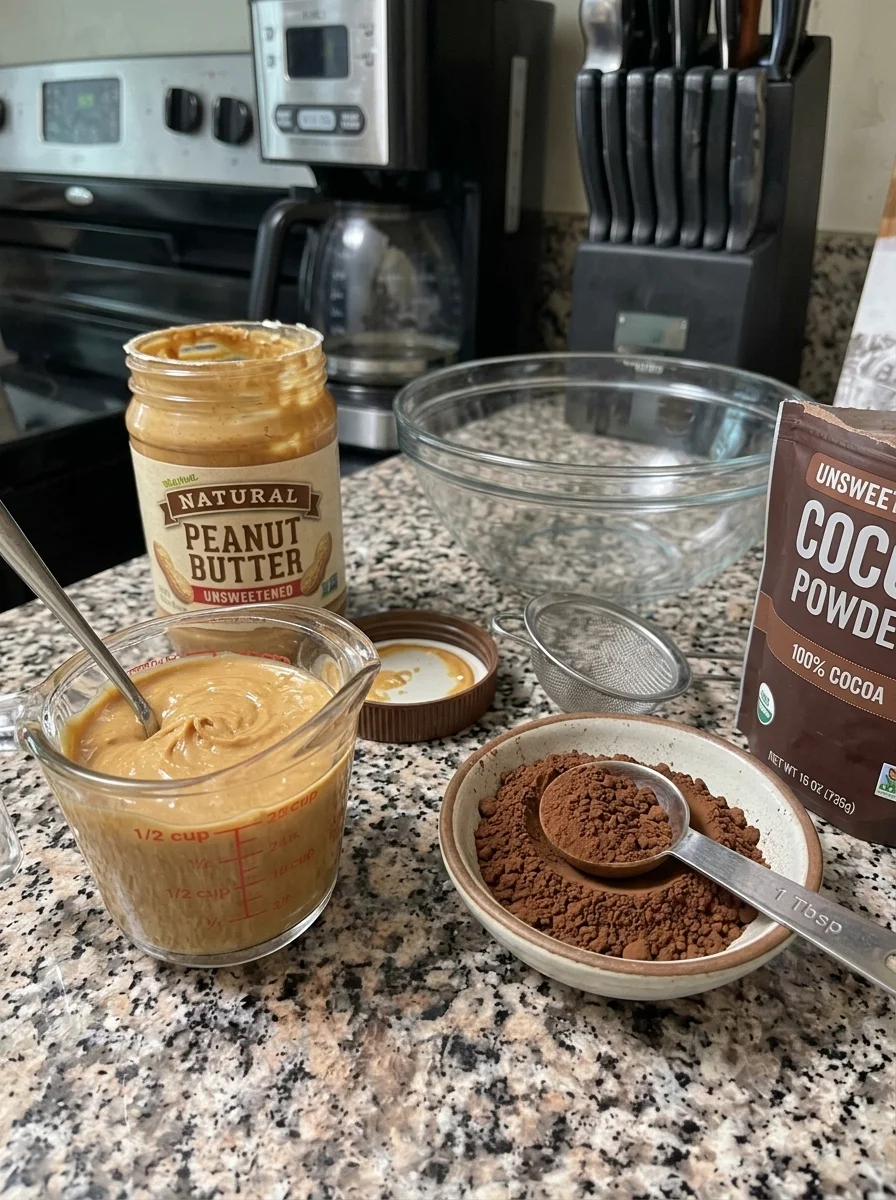
- ½ cup natural creamy peanut butter, unsweetened and thoroughly stirred
- 2 tablespoons unsweetened cocoa powder
Optional toppings or sweeteners increase the ingredient count. They are not required for the basic mixture.
Ingredient Notes
Natural peanut butter: Stir the entire jar until the oil and solids are evenly combined before measuring. A scoop from an oily surface behaves differently from a scoop of dry solids at the bottom. Choose smooth peanut butter for the most uniform texture.
Cocoa powder: Use unsweetened cocoa that you enjoy. Dutch-process cocoa often tastes less sharp, while natural cocoa can have a brighter, more acidic character. Either works because there is no baking chemistry or leavening involved. Break up lumps or sift before adding.
Salted or unsalted peanut butter: Either can work. Salted peanut butter provides a savory balance without a separate salt addition. Unsalted peanut butter gives a simpler peanut-and-cocoa flavor.
Peanut butter consistency: Brands vary widely. A runny natural peanut butter creates a softer mixture initially, while a dry, firm product can become very stiff when cocoa is added. Warming helps temporarily, but it does not permanently change the ingredient ratio.
How to Make It
1. Stir and Measure the Peanut Butter
Mix the peanut butter thoroughly in its jar, then measure ½ cup into a bowl. Level the measure for a repeatable batch rather than using a heaping scoop.
If it is already easy to stir, no warming is needed.
2. Soften Only If Necessary
For firm peanut butter, use a microwave-safe bowl and warm for about 5–10 seconds at a time, stirring between intervals. Stop once it is pliable, not hot or bubbling.
Let it cool until comfortably warm before continuing. Do not microwave a jar unless its packaging explicitly permits it.
3. Add the Cocoa
Sift the cocoa over the peanut butter. Stir slowly at first so the powder becomes moistened rather than scattering out of the bowl.
Scrape the bottom and sides, then continue stirring until the color is uniform and no dry cocoa pockets remain. A spoon may work better than a delicate whisk once the mixture thickens.
4. Assess the Texture
The result should be thick and spreadable, though it may be quite firm depending on the peanut butter. Brief additional warming can make mixing easier if needed.
Do not expect vigorous stirring to turn it into a light, whipped dessert. There is no aerated cream or other ingredient to hold a substantial amount of air.
If you decide to add milk, yogurt, or sweetener to change the texture or taste, treat that as a separate variation with different ingredient counts and storage needs.
5. Portion and Chill If Desired
Divide into four small dishes or two larger ones. Chill for 20–30 minutes only if you want a firmer result. Chilling is optional and may make an already stiff batch harder to spoon.
Before serving, let a cold portion stand for about 5–10 minutes if needed. Serve in small amounts because the mixture is concentrated and rich.
Tips for the Smoothest Result
Stir the jar first. This is the most important step for avoiding an oily or dry mixture.
Sift lumpy cocoa. Dry clumps are harder to smooth once coated in peanut butter.
Warm gently. Short intervals make it easier to stop before the peanut butter overheats.
Keep expectations clear. This is an unsweetened chocolate peanut butter cream, not a fluffy chocolate pudding.
Portion before chilling. A firm batch is easier to divide while still soft.
Taste before garnishing. If you dislike the bitterness of the base, more cocoa on top will intensify it rather than balance it.
Troubleshooting
| Problem | Likely cause | Helpful adjustment |
|---|---|---|
| Mixture is too stiff | Dry peanut butter plus absorbent cocoa | Warm a serving briefly; consider a different peanut butter next time. |
| Surface looks oily | Peanut butter was not fully stirred | Mix thoroughly; ensure the whole jar is combined before measuring next time. |
| Cocoa lumps remain | Powder was compacted | Press lumps against the bowl and sift before mixing in future batches. |
| Flavor is bitter | Unsweetened cocoa is prominent | Try the optional sweetened variation rather than adding more cocoa. |
| Dessert is not fluffy | The ingredients do not provide a whipped structure | Serve as a dense cream or use a separate mousse recipe with an aerated ingredient. |
| Chilled portions are hard | Peanut butter firmed during refrigeration | Allow a brief softening period before serving. |
Variations
Sweetened Three-Ingredient Version
Add a small amount of powdered sweetener suitable for an uncooked dessert. Follow its label for sweetness equivalence: concentrated monk fruit blends and erythritol products are not interchangeable tablespoon for tablespoon.
Mix gradually and taste. A powder can also make the texture firmer, so begin with less than you think you need. This changes the recipe to three ingredients and does not remove naturally occurring sugar from peanuts.
Chocolate Almond Butter
Replace peanut butter with well-stirred creamy almond butter. Expect a different flavor and possibly a different consistency. This variation contains tree nuts and is not a general solution for someone with nut allergies.
Crunchy Peanut Topping
Sprinkle with a few chopped roasted peanuts immediately before serving. The garnish adds texture and changes nutrition.
Softer Yogurt Variation
Stir a small amount of thick plain yogurt into a portion until it reaches a consistency you enjoy. This introduces dairy, tang, and moisture, so it is a different dessert with different storage requirements. Do not apply the base recipe’s storage window unchanged.
Serving Ideas
Serve a small portion in a dessert cup, allowing the rich peanut butter flavor to stand on its own. Four small portions are often more practical than two large ones.
You can also use a thin layer on toast, crackers, or sliced fruit. Those accompaniments add ingredients, carbohydrates, and calories, so include them when calculating the complete serving.
For a dessert plate, offer the mixture alongside strawberries or apple slices rather than adding fruit to the storage container. Use clean utensils to portion it.
Storage and Make-Ahead
For the plain two-ingredient mixture, store in a clean, covered container in the refrigerator and plan to use within one week, provided both ingredients were fresh and handled appropriately. Follow any shorter instructions on the product labels.
The mixture will firm when chilled. Let a serving soften briefly before eating rather than repeatedly warming the entire batch.
For longer storage, freeze small portions in suitable airtight containers for up to 2 months for best quality. Thaw in the refrigerator and stir if necessary. Texture may change somewhat after thawing.
Keep wet utensils, fresh fruit, dairy, or other additions out of the stored base. Adding perishable ingredients changes its storage needs.
Frequently Asked Questions
Why does it not taste like a sweet peanut butter cup?
There is no added sweetener in the basic recipe. Unsweetened cocoa supplies bitterness, and peanut butter provides only mild natural sweetness. Add the optional third ingredient if you prefer a sweeter dessert.
Can I use powdered peanut butter?
Not directly. Powdered peanut butter has different fat and moisture properties and usually needs added liquid. It would require a separate formula rather than the same two-ingredient method.
Can I whip it with a hand mixer?
A mixer can combine the ingredients, but it will not give them the stable airiness of whipped cream mousse. For such a small, thick batch, a spoon is usually simpler.
Is it high in protein?
Peanut butter contributes protein, but it also supplies substantial fat and calories. The title should not imply the nutrition of a yogurt-and-protein-powder dessert. Check your product label for the amount per portion.
Are two servings about 190–220 calories each?
Not with the listed half cup of peanut butter. Half a cup equals eight tablespoons. If your peanut butter supplies 190 calories per two tablespoons, it contributes about 760 calories to the batch before cocoa. With cocoa, the total may approach 800 calories: roughly 400 per half batch or 200 per quarter batch.
What about protein and carbohydrates?
If the peanut butter contains 7 grams protein per two tablespoons, the half cup supplies 28 grams before cocoa. Divide the complete ingredient totals by two or four according to the portions you make. Carbohydrate, fiber, and sugar amounts vary, so a fixed net-carb estimate is not provided.
Recipe Card
2-Ingredient Chocolate Peanut Butter Mousse — No Added Sugar
A dense, unsweetened chocolate peanut butter cream. Rich and spreadable rather than airy or whipped.
Prep: 5 minutes | Optional chill: 20–30 minutes
Yield: Approximately ½ cup | Suggested servings: 4 small portions or 2 larger portions
Ingredients
- ½ cup unsweetened natural creamy peanut butter, thoroughly stirred
- 2 tablespoons unsweetened cocoa powder
Instructions
- Measure the well-stirred peanut butter into a bowl. If firm, warm gently in a microwave-safe bowl in short intervals until pliable.
- Sift in cocoa. Stir slowly, then mix thoroughly until no dry pockets remain.
- Divide among four small dishes or two larger dishes.
- Serve immediately, or refrigerate for 20–30 minutes for a firmer texture.
- Let chilled portions soften briefly if needed before serving.
Notes
- No added sugar is more accurate than assuming the recipe is entirely sugar-free.
- The texture is dense and spread-like; these ingredients do not create traditional mousse aeration.
- Optional sweetener makes a three-ingredient version.
- Keep the plain mixture covered and refrigerated for up to one week, subject to ingredient freshness and label guidance.
- Illustrative nutrition: approximately 200 calories per quarter batch or 400 per half batch, using peanut butter with 190 calories per two tablespoons and allowing for cocoa. Calculate from your labels for accurate totals.
- Contains peanuts; check product labels for other allergens.
Final Thoughts
Well-stirred peanut butter and sifted cocoa make this simple mixture smooth and consistent. Serve it as a small, rich chocolate peanut butter cream, and choose the optional sweetened variation if an unsweetened dessert is not to your taste. Accurate portioning makes both the eating experience and nutrition clearer.
Print
Sugar-Free 2-Ingredient Chocolate Peanut Butter Mousse
Ingredients
- ½ cup unsweetened natural creamy peanut butter, thoroughly stirred
- 2 tablespoons unsweetened cocoa powder
Instructions
- Measure the well-stirred peanut butter into a bowl. If firm, warm gently in a microwave-safe bowl in short intervals until pliable.
- Sift in cocoa. Stir slowly, then mix thoroughly until no dry pockets remain.
- Divide among four small dishes or two larger dishes.
- Serve immediately, or refrigerate for 20–30 minutes for a firmer texture.
- Let chilled portions soften briefly if needed before serving.