
Slow Cooker Mini Meatloaves and Potatoes
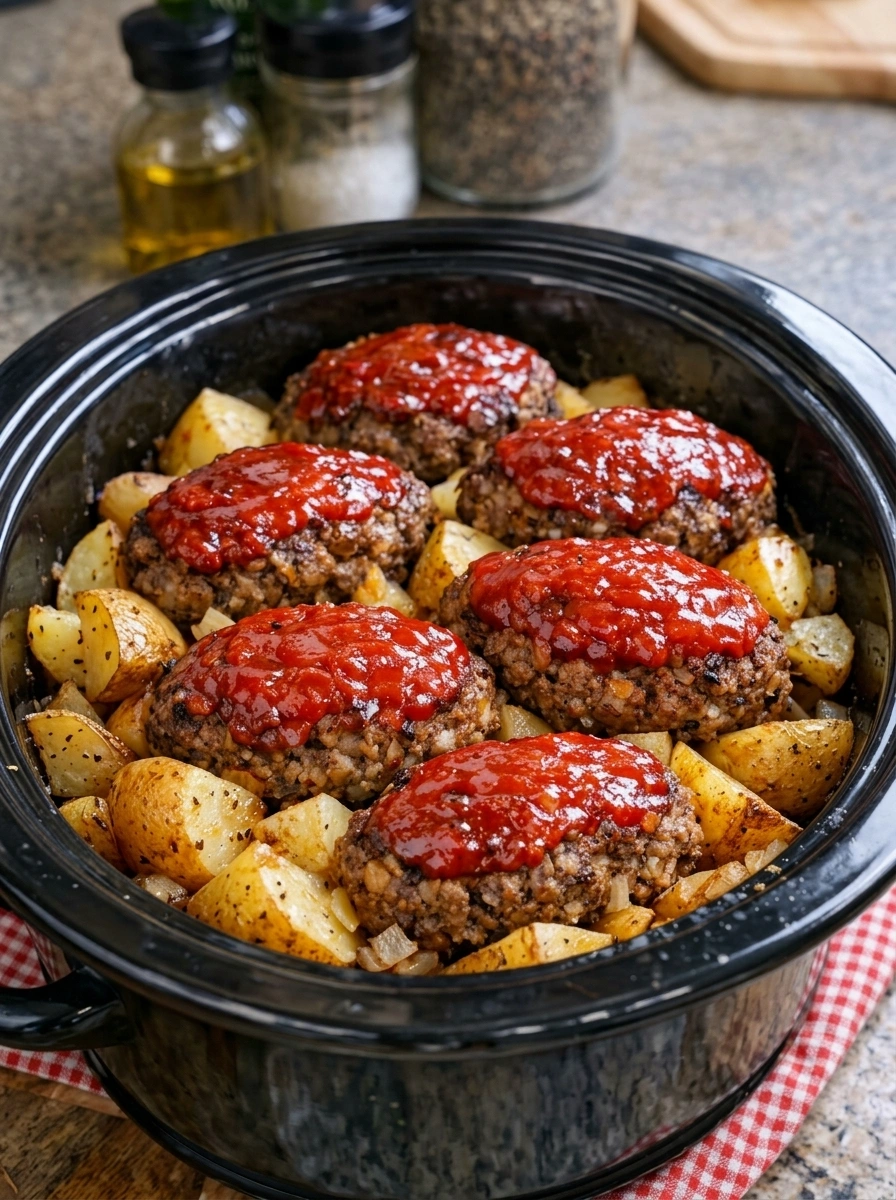
Slow Cooker Mini Meatloaves and Potatoes: Tender, Juicy, and Built for Comfort
There’s a category of dinner that earns a specific kind of devotion — the kind where people come home, smell what’s been cooking all day, and immediately relax in a way that has nothing to do with what happened at work. Slow Cooker Mini Meatloaves and Potatoes is that dinner. Individually portioned meatloaves made from seasoned ground beef, Italian breadcrumbs, and Worcestershire sauce, set on a bed of buttery baby Yukon Gold potatoes, everything cooked together low and slow until the meatloaves are tender and juicy and the potatoes are fork-tender and infused with the savory juices that have been collecting in the pot all day. And over the top, a tangy, slightly sweet ketchup and Dijon glaze that caramelizes against the meatloaves during the final stretch of cooking.
This is all-in-one cooking at its best — one vessel, one prep session, one dinner that feeds six to eight people and produces almost no cleanup. The slow cooker does everything after a twenty-minute prep window. And because the meatloaves are individual rather than one large loaf, every person gets their own perfectly cooked portion with a fully glazed exterior rather than fighting over the ends of a shared loaf.
If you grew up eating meatloaf as a comfort meal, this version will feel like a significant upgrade. If meatloaf has never been your thing, the mini format and the slow-cooker moisture retention may change your mind entirely. This guide covers everything: why mini meatloaves outperform large ones, the science of slow-cooker meatloaf, a full ingredient breakdown, step-by-step instructions, and every tip for making the best possible version.
Why Mini Meatloaves Are Better Than One Large One
The choice to make individual mini meatloaves rather than a single large loaf isn’t just a presentation decision — it has meaningful practical implications for texture, cook time, and the overall experience of eating the dish.
Every piece has a fully glazed exterior. One of the most satisfying components of any meatloaf is the sweet-tangy glazed crust on the top and sides. In a large loaf, only the top surface and the two ends receive the glaze. The interior portions served from the center get glaze on just one surface. With mini meatloaves, every single serving has glaze on every exposed surface — four sides and the top — meaning every bite has that caramelized, rich exterior alongside the tender interior.
They cook more evenly. A large meatloaf has a thermal disadvantage: the center is far from any heat source and takes significantly longer to reach food-safe temperature than the edges. This temperature differential is the enemy of even cooking — by the time the center is properly cooked, the outer edges are overcooked and dry. Mini meatloaves are thin enough that heat penetrates the center quickly, producing an evenly cooked, uniformly tender result throughout every piece.
Individual portions simplify serving. Each person gets their own meatloaf. No slicing required at the table. No fighting over end pieces vs. middle slices. No uneven portions when one person takes a large slice and leaves nothing for the next. The mini format makes this a simple, dignified dinner.
They’re ideal for the slow cooker. A single large meatloaf can be challenging in a slow cooker — it tends to cook unevenly given the vessel’s shape, and removing it intact from the pot without it falling apart requires care. Mini meatloaves can be placed and removed individually, arranged in a single layer, and distribute more evenly within the cooking environment.
The Science of Slow Cooker Meatloaf
Meatloaf is traditionally baked in an oven — typically at 350°F for 60 to 75 minutes for a standard-sized loaf. The slow cooker does something fundamentally different, and understanding the differences helps explain why slow cooker meatloaf has such a devoted following.
Moisture retention is dramatically higher. Oven-baked meatloaf loses moisture through evaporation as the oven’s dry heat circulates around the loaf. A slow cooker is a sealed, moist environment — any moisture that escapes the meatloaf condenses on the lid and drips back down, or collects in the cooking liquid that accumulates in the pot. The result is meatloaf that stays significantly juicier than its oven-baked counterpart.
The lower temperature produces a different texture. At 160°F internal temperature (the food safety requirement for ground beef), slow-cooked meatloaf achieves that temperature through a gradual, gentle climb over several hours rather than rapid oven heat. This gentler cooking produces a more tender, less compressed texture in the finished meatloaf.
The potatoes cook in the accumulated meat juices. This is the most compelling argument for the slow cooker method in this specific recipe: the baby Yukon Gold potatoes sitting beneath the meatloaves spend hours in contact with the seasoned meat juices that drip down through the cooking process. Those juices — flavored with Worcestershire sauce, Italian seasoning, smoked paprika, and the glaze’s ketchup and brown sugar — infuse into the potatoes slowly and completely, turning them from simply seasoned potatoes into something deeply flavored with the character of the entire dish.
The glaze develops over time. Applied to the meatloaves before the slow cooker lid goes on, the glaze has hours to set, thicken, and deepen in flavor. A second application in the final 30 minutes reinforces the glaze and adds freshness. The result is a more caramelized, more complex glaze than the quick oven-broil application most meatloaf recipes rely on.
The Meatloaf Mix: What Every Ingredient Contributes
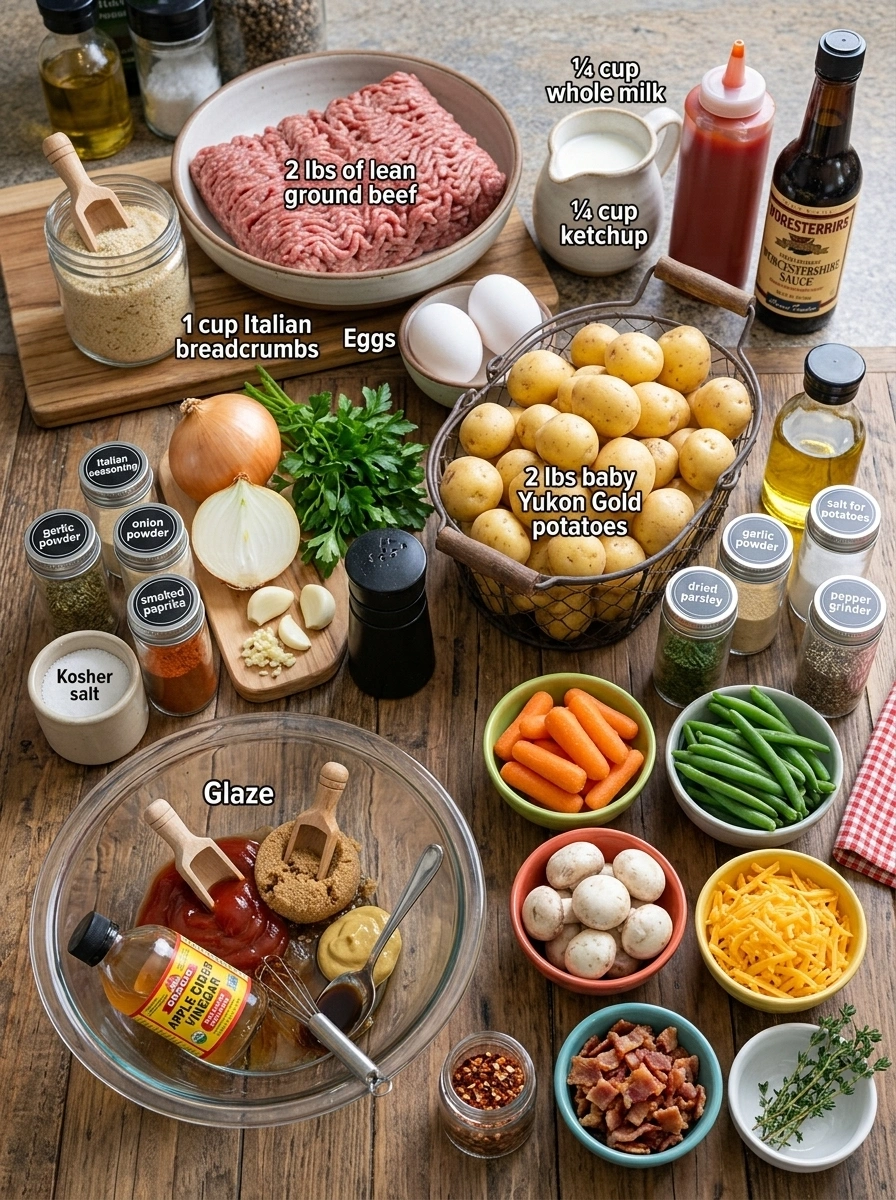
Lean Ground Beef (2 lbs)
The foundation. Lean ground beef — 90/10 is the target — provides the beef flavor and protein without an excess of fat that can make the finished meatloaf greasy and cause the slow cooker liquid to become unpleasantly oily. The two-pound quantity distributed across six to eight mini meatloaves produces generous individual portions.
Some cooks prefer a mix of ground beef and ground pork — the pork adds additional fat and a different dimension of flavor that’s worth trying in a second batch. A classic meatloaf ratio is 60% beef to 40% pork.
Italian Breadcrumbs (1 cup)
Breadcrumbs serve two functions in meatloaf. First, they absorb the milk and egg liquid during mixing, becoming a binding matrix that holds the meatloaf together through cooking. Second, they extend the mixture — without breadcrumbs, a meatloaf made entirely from ground beef would contract into a dense, almost hamburger-like texture during cooking. The breadcrumbs create air pockets and a more tender, open crumb structure.
Italian breadcrumbs are preferable to plain because they’re already seasoned with herbs and Parmesan, adding a layer of flavor that plain breadcrumbs don’t provide. Panko can be used for a lighter texture; regular Italian breadcrumbs produce the classic meatloaf consistency most people expect.
Eggs (2 large)
The binding agent that holds everything together. Eggs contain proteins that coagulate during cooking, creating a matrix that binds the ground beef, breadcrumbs, and aromatics into a cohesive loaf that holds its shape when cooked and sliced.
Yellow Onion (1 small, finely diced)
Finely diced is important — larger onion pieces don’t soften and integrate fully in a meatloaf, creating textural inconsistency. Finely diced or even grated onion disappears into the mixture during cooking, contributing sweet, savory moisture without any visible chunks.
Garlic (3 cloves, minced)
Fresh garlic for depth and aroma. Combined with the garlic powder in the seasoning, it creates a two-dimensional garlic presence — the immediate, pungent character of fresh garlic and the more diffuse, background warmth of the powder.
Whole Milk (¼ cup)
The moistening liquid that the breadcrumbs absorb, creating a panade — a mixture of starch and liquid that traps moisture inside the meatloaf and produces a tender texture. Never skip the milk in meatloaf. It’s the difference between a meatloaf that’s moist and one that’s dense and dry.
Worcestershire Sauce (2 tbsp)
The umami depth that makes meatloaf taste specifically like meatloaf rather than a hamburger in loaf form. Worcestershire is the single most important seasoning ingredient in this recipe — its complex fermented flavor of anchovies, tamarind, molasses, and vinegar adds a savory richness to the beef that amplifies its natural flavor.
Ketchup (2 tbsp, in the meatloaf) + The Glaze
Ketchup appears in the meatloaf itself, where it contributes sweetness, tang, and tomato richness to the interior, and in the glaze, where it’s the primary ingredient. This double application ensures tomato sweetness is present throughout the dish — in every bite of the interior and on every surface of the exterior.
The Seasoning Blend
Italian seasoning, onion powder, garlic powder, smoked paprika, salt, and black pepper build a well-rounded, deeply savory seasoning profile. The smoked paprika is the nuanced choice — it adds a gentle smokiness that makes the meatloaf taste as if it spent time in a smoker, deepening the entire flavor profile without any actual smoking required.
The Glaze: The Finishing Element That Defines the Dish
The glaze is five ingredients and less than five minutes to prepare, but it’s the component that takes this from “good meatloaf” to something people specifically request.
Ketchup (½ cup) is the base — sweet, tangy, and tomatoey, it’s the classic meatloaf glaze ingredient for good reason.
Brown sugar (2 tbsp) adds a caramel sweetness that deepens during cooking and produces the characteristic sticky, slightly caramelized exterior of a great meatloaf glaze. Dark brown sugar has a more pronounced molasses note; light brown sugar is milder. Both work.
Dijon mustard (1 tbsp) cuts through the sweetness with sharpness and complexity, preventing the glaze from tasting flat or one-dimensionally sweet. Dijon’s white wine character and mustard heat add sophistication.
Worcestershire sauce (1 tbsp) ties the glaze back to the meatloaf’s interior seasoning — the same flavor that’s inside the loaf appears in the glaze coating, creating cohesion rather than contrast.
Apple cider vinegar (1 tsp) is the acid brightener — a small amount that lifts the glaze and prevents it from tasting heavy. It’s barely perceptible on its own but makes the overall balance noticeably better.
The Potatoes: Why Baby Yukon Gold
The choice of baby Yukon Gold potatoes is deliberate and worth understanding.
Baby Yukon Golds cook in the skin without peeling, which is a significant practical advantage for a slow cooker recipe — no prep work beyond rinsing, and the skins become tender and slightly creamy rather than tough during the long cook.
Their waxy texture holds together. Starchy potatoes like russets can disintegrate during extended slow cooker cooking. Waxy, low-starch Yukon Golds maintain their structure and produce distinct, fork-tender potato pieces rather than mashed potato texture.
Their buttery flavor is incomparable. Yukon Golds have a natural butteriness that their name correctly implies — they taste rich and creamy without any added butter. After six to seven hours absorbing meat juices in the slow cooker, they’re extraordinary.
They sit beneath the meatloaves throughout cooking. This positioning is structural as well as practical — the potatoes form a bed that elevates the meatloaves slightly above the bottom of the slow cooker, allowing air and liquid to circulate somewhat beneath the loaves. The potatoes absorb the dripping glaze and meat juices throughout cooking, becoming infused with the entire flavor profile of the dish.
How to Make Slow Cooker Mini Meatloaves and Potatoes: Step-by-Step
Step 1: Prepare the Slow Cooker
Lightly grease the inside of a 6-quart or larger slow cooker with cooking spray or a thin coat of olive oil. A 6-quart cooker comfortably holds six to eight mini meatloaves arranged in a single layer on top of the potatoes.
Step 2: Make the Meatloaf Mixture
In a large bowl, combine the ground beef, Italian breadcrumbs, eggs, finely diced onion, minced garlic, milk, Worcestershire sauce, ketchup, Italian seasoning, onion powder, garlic powder, smoked paprika, salt, black pepper, and fresh parsley.
The most important technique: mix gently. Overworking ground beef activates myosin proteins that cause the meat to bind tightly, producing a dense, tough, almost rubbery meatloaf. Mix just until all ingredients are incorporated — a few gentle folds with clean hands or a large fork, stopping the moment you no longer see dry patches of breadcrumb or streaks of egg. Some visible small lumps are fine and preferable to an overworked mixture.
Step 3: Shape the Mini Meatloaves
Divide the mixture into 6 to 8 equal portions — a kitchen scale makes this easy and ensures consistent sizing, which means consistent cooking time. Shape each portion into a small oval loaf, roughly 4 inches long by 2 inches wide by 1.5 inches tall. Consistent shape and size matters for even cooking — mismatched sizes mean some meatloaves are done before others.
Step 4: Season and Arrange the Potatoes
Toss the baby Yukon Gold potatoes with olive oil, garlic powder, dried parsley, paprika, salt, and black pepper until evenly coated. Arrange the seasoned potatoes in an even layer across the bottom of the greased slow cooker. They form the base on which the meatloaves rest.
Place the shaped mini meatloaves on top of the potatoes, spacing them evenly.
Step 5: Apply the Glaze
Whisk the glaze ingredients together in a small bowl until smooth. Brush generously over each mini meatloaf — top and sides. Reserve approximately one third of the glaze for the second application during the final 30 minutes of cooking.
Step 6: Cook
Cover and cook on LOW for 6 to 7 hours or on HIGH for 3 to 4 hours. LOW is the strongly preferred setting for this recipe — the extended low-heat cook produces significantly juicier, more tender meatloaves with better-developed flavor than the HIGH setting.
The meatloaves are done when an instant-read thermometer inserted into the center of the largest loaf reads 160°F (71°C) — the USDA-required safe internal temperature for ground beef.
In the final 30 minutes of cooking, carefully lift the lid, brush the remaining glaze over each meatloaf, replace the lid, and continue cooking.
Step 7: Rest and Serve
Carefully remove the meatloaves from the slow cooker using a wide spatula. They will be tender — handle gently. Arrange on a platter or individual plates. Remove the potatoes and spoon the accumulated cooking juices over them before serving.
Garnish with fresh chopped parsley. Serve with steamed green beans, roasted vegetables, corn, or warm dinner rolls.
Tips for the Best Result
Don’t overmix the meat. This is the most common meatloaf mistake and the most impactful one. Mix until just combined and stop.
Use a kitchen scale for uniform portions. Equal weight means equal cooking time. It also makes the platter presentation considerably more polished.
LOW over HIGH, always. The additional hours produce measurably better texture and flavor. Plan for this recipe when you have the time to do it right.
Check temperature, not time. Slow cookers vary considerably in their actual temperature output. The 160°F internal temperature is the reliable indicator of doneness — use an instant-read thermometer rather than relying purely on time.
Apply glaze twice. The first application goes on before cooking. The second application in the final 30 minutes refreshes the glaze after hours of slow cooking. Both applications matter.
Spoon cooking juices over the potatoes. The liquid that accumulates in the bottom of the slow cooker is concentrated, deeply flavored meatloaf juice — pouring it over the potatoes before serving is the step that takes the potatoes from very good to extraordinary.
Serving Suggestions
With steamed green beans. The classic meatloaf side — crisp, simple, and bright against the richness of the meatloaf and potatoes. Finish with butter and salt.
With warm dinner rolls. For soaking up the cooking juices. This is comfort food at its most complete.
With roasted vegetables. A sheet pan of roasted carrots, broccoli, or Brussels sprouts is a more vegetable-forward complement that balances the richness of the main course.
With corn. Steamed or roasted corn adds sweetness and color alongside the savory meatloaf and earthy potatoes.
With a simple green salad. Dressed with lemon vinaigrette — the acidity cuts through the richness of the glaze and cheese and provides a refreshing counterpoint.
Storage, Reheating, and Meal Prep
Refrigerator: Store meatloaves and potatoes together in an airtight container for up to 4 days. The flavors continue to develop during refrigerator storage — leftover meatloaf the next day is often even better than the original serving.
Freezer: Freeze cooled meatloaves and potatoes separately (potatoes freeze less gracefully than meat — their texture changes somewhat after freezing and thawing) in freezer-safe containers for up to 3 months. Thaw overnight in the refrigerator before reheating.
Reheating: Oven at 350°F for 15 to 20 minutes is the best method for maintaining moisture and preventing the glaze from drying out. Microwave in 90-second intervals works for quick reheating; add a splash of water or beef broth to the container to prevent drying.
Meal prep: Mini meatloaves are an exceptional meal prep protein — individually portioned, self-contained, and reheating beautifully. Make a batch on Sunday for lunches and dinners throughout the week.
Variations
Turkey Mini Meatloaves: Replace the ground beef with lean ground turkey. Add an extra tablespoon of olive oil to the mixture (turkey is leaner than beef and benefits from additional fat) and increase the smoked paprika to 1½ teaspoons to compensate for the milder flavor of turkey.
Bacon-Wrapped: Before placing in the slow cooker, wrap each mini meatloaf with one strip of thinly sliced bacon secured with a toothpick. The bacon renders during cooking, basting the meatloaf continuously and producing a smoky, crispy exterior.
Cheesy Center: Press a 1-inch cube of sharp cheddar or pepper jack into the center of each meatloaf before shaping closed around it. During cooking, the cheese melts into a molten center that surprises everyone at the table.
Vegetable-Loaded: Add diced green bell pepper, diced mushrooms, and shredded zucchini to the meatloaf mixture. The vegetables add moisture, nutrition, and flavor while reducing the overall meat content. Excellent for sneaking vegetables past picky eaters.
Spicy Southwest: Replace the Italian seasoning with a Tex-Mex blend (cumin, chili powder, coriander). Add diced jalapeño and pepper jack cheese to the mixture. Swap the glaze’s Dijon mustard for chipotle in adobo.
Frequently Asked Questions
Can I skip the browning step? There is no browning step in this recipe — the meatloaves go straight from shaping into the slow cooker, which is one of the recipe’s great conveniences. The glaze creates the flavorful exterior in place of browning.
How do I prevent the meatloaves from falling apart? The two eggs and cup of breadcrumbs are the structural binding agents. Don’t reduce either. Also avoid overworking the mixture — gentle mixing preserves the binding proteins in better condition. Handle the cooked meatloaves gently when removing from the slow cooker.
Can I add vegetables to the slow cooker? Yes — baby carrots, whole green beans, and sliced mushrooms all cook beautifully alongside the potatoes. Add them to the potato layer at the bottom of the slow cooker. Root vegetables like carrots do well on the full cook time; green beans may become very soft if cooked the full 6 to 7 hours — add them in the last 2 hours if you prefer more texture.
My glaze is very thin — how do I thicken it? The glaze thickens during cooking as it concentrates. If you want a thicker raw glaze, reduce the recipe slightly or chill it briefly before brushing. The finished meatloaves will have a properly concentrated, thickened glaze after hours in the slow cooker regardless of the raw glaze’s initial consistency.
Can I make these in the oven instead? Yes. Place the shaped meatloaves and seasoned potatoes in a greased 9×13-inch baking dish. Brush with glaze. Bake at 375°F for 45 to 55 minutes, or until the meatloaves reach 160°F internally and the potatoes are fork-tender. Apply a second glaze application in the last 10 minutes.
Recipe at a Glance
| Detail | Info |
|---|---|
| Prep Time | 20 minutes |
| Cook Time | 6–7 hours (LOW) or 3–4 hours (HIGH) |
| Total Time | 6 hours 20 minutes (LOW) |
| Servings | 6–8 |
| Calories | ~520 per serving |
| Refrigerator Storage | Up to 4 days |
| Freezer Storage | Up to 3 months |
Final Thoughts
Slow Cooker Mini Meatloaves and Potatoes is the kind of dinner that earns a long-term place in the family rotation — not because it’s exciting or trendy, but because it’s genuinely great and genuinely easy. Twenty minutes in the morning, six hours of the slow cooker doing everything, and a kitchen that smells extraordinary when you walk back in.
The mini format means everyone gets their own glazed, juicy meatloaf. The potatoes mean there’s no separate side to manage. The glaze means it tastes like something you worked harder on than you did.
Make it on a Sunday when you have time to appreciate the smell. Make it on a Monday when you don’t have time for anything complicated.
Either way, it’ll be waiting for you when you need it most.