
High-Protein Chocolate Peanut Butter Frosty
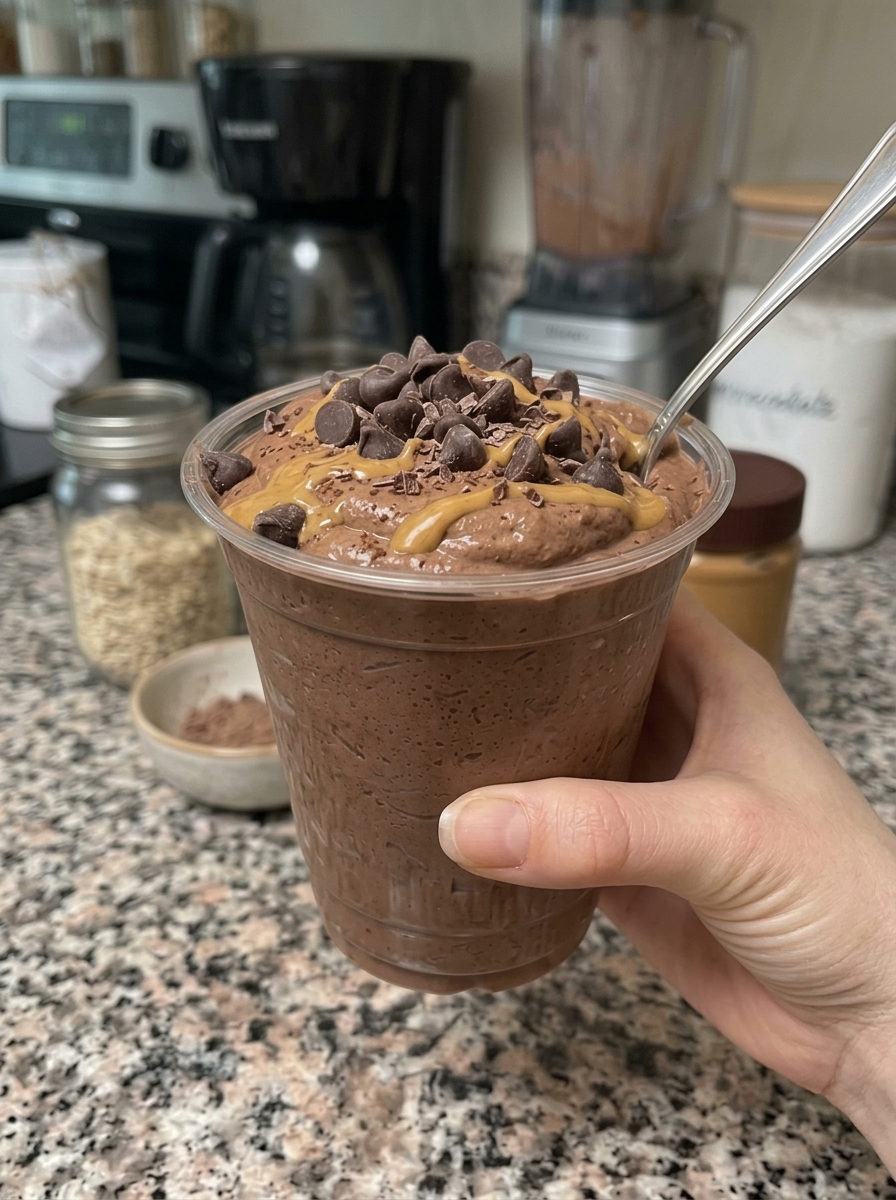
Rich chocolate, creamy peanut butter, and cold Greek yogurt come together in this easy homemade Frosty-style treat. It blends into a thick, chilled dessert with a lightly tangy finish and plenty of chocolate-peanut-butter flavor. Enjoy it straight from the blender with a spoon, or add a little more milk for a drinkable shake.
The basic recipe uses liquid almond milk and regular ice cubes. You can also freeze some of the yogurt for a creamier frozen base, but that is an optional preparation step rather than a requirement. No ice cream machine or cooking is needed.
Greek yogurt and chocolate protein powder provide most of the protein, while peanut butter adds richness and cocoa deepens the chocolate flavor. The result is a substantial snack or two smaller desserts, with sweetness and thickness you can adjust to the products you use.
Recipe at a Glance
- Prep time: About 5 minutes
- Cook time: None
- Total time: About 5 minutes with ready-to-use ingredients
- Yield: 1 generous Frosty or 2 smaller servings
- Equipment: High-speed blender rated for ice, spatula, measuring spoons, and chilled serving glasses or bowls
- Optional advance preparation: Several hours to freeze yogurt or milk cubes
Why You’ll Love This Recipe
- A familiar flavor pairing: Cocoa and peanut butter give the base a rich, dessert-like taste.
- Quick preparation: Add the creamy ingredients, blend, then blend in ice.
- Adjustable texture: Keep it thick enough for a spoon or loosen it for sipping.
- Flexible portions: Serve one large snack or two smaller treats.
- No ice cream required: Greek yogurt supplies the creamy base.
- Simple finishing touches: A few chocolate chips or a small peanut butter drizzle add contrast.
What Is a Protein Frosty?
This is a blended, ice-chilled yogurt dessert inspired by the spoonable consistency of a chocolate Frosty. It is not an exact copy of a commercial frozen dessert. Greek yogurt brings tang, protein powder affects sweetness and thickness, and regular ice produces a different texture from a churned ice cream base.
The finished mixture can range from a thick smoothie to a soft, spoonable shake. Your blender, yogurt thickness, ice size, and protein powder all affect the result. Frozen yogurt cubes can help create a more substantial frozen base without relying entirely on extra water ice.
Serve immediately. As the ice melts, the texture loosens, so this is best treated as a blend-and-enjoy recipe rather than a dessert that holds its original consistency for hours.
Ingredients
For the Frosty
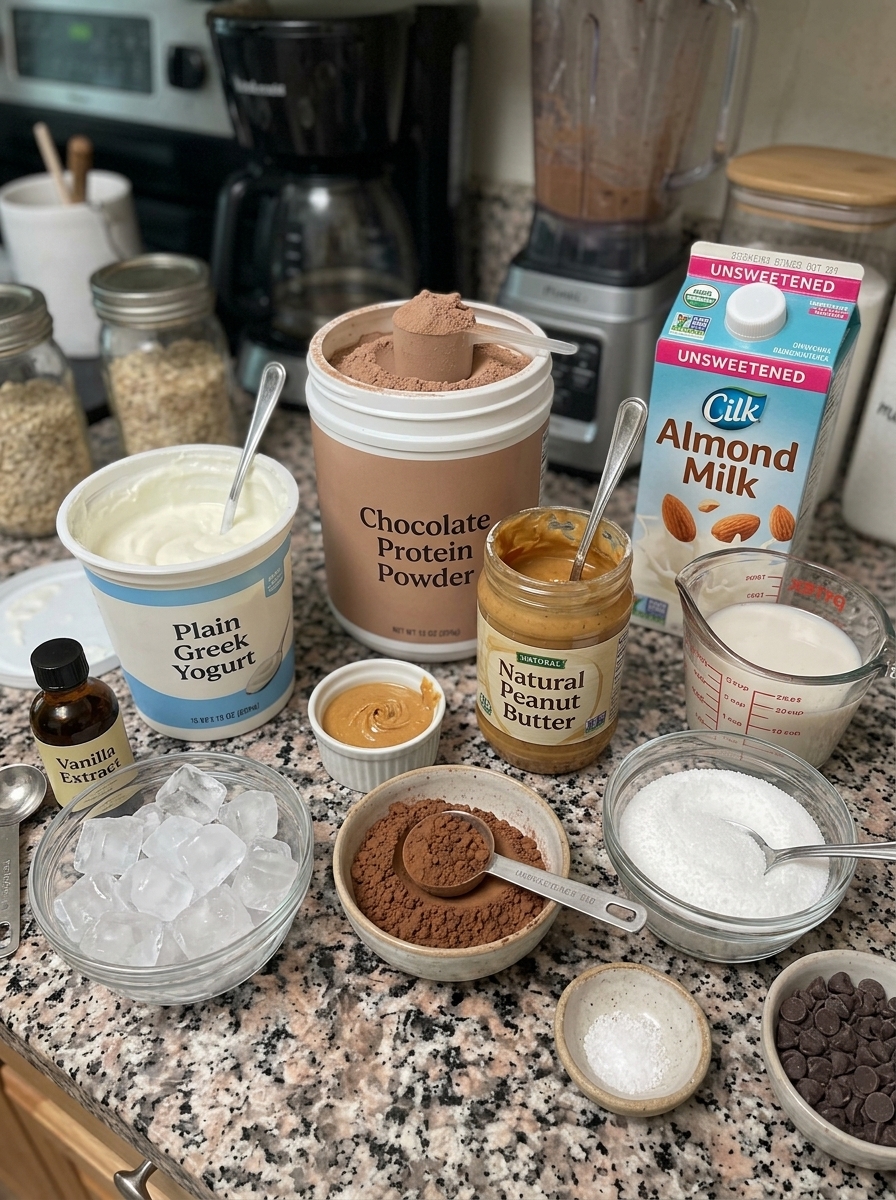
- 1 cup plain nonfat Greek yogurt
- 1 scoop chocolate protein powder, using the package serving size
- 2 tablespoons natural creamy peanut butter, well stirred
- 2 tablespoons unsweetened cocoa powder
- ½ cup unsweetened almond milk, plus more only as needed
- 1–2 tablespoons powdered erythritol or preferred sweetener, to taste
- 1 teaspoon vanilla extract
- 1 cup regular ice cubes
- Small pinch of salt, optional
Optional Toppings
- A few sugar-free chocolate chips
- A small drizzle of peanut butter
- A little whipped cream
Toppings are additional to the ingredients in the base and change the nutrition totals.
Ingredient Notes
Greek yogurt: Thick, strained nonfat yogurt gives the recipe body. Drain off any liquid collected on top before measuring. Low-fat or full-fat yogurt also works, with a richer flavor and different nutrition. Plain yogurt keeps the sweetness more adjustable than a sweetened flavored variety.
Chocolate protein powder: Use a powder you enjoy. A recipe with this much chocolate flavor still cannot reliably disguise an unpleasant powder aftertaste. Scoop sizes vary, so follow the package serving size rather than assuming every scoop contains the same amount or protein. Whey, casein blends, and plant-based powders absorb liquid differently.
Peanut butter: Stir natural peanut butter thoroughly before measuring so the oil and solids are evenly combined. Two tablespoons contribute noticeable richness and calories. Powdered peanut butter is not a direct texture equivalent; it absorbs moisture and provides less of the fat that makes this version creamy.
Cocoa powder: Use unsweetened baking cocoa. Two tablespoons create a strong chocolate flavor, especially alongside chocolate protein powder. If your powder is already intensely chocolatey, you can begin with one tablespoon and add the second after tasting. This changes the formula slightly but gives you more control over bitterness.
Almond milk: The base recipe uses liquid milk. Another unsweetened milk can be substituted, with changes in flavor and nutrition. Start with the measured half cup and add extra by the tablespoon only if necessary for blending.
Sweetener: Taste before adding the maximum amount. Some chocolate powders are already very sweet. Powdered erythritol has a different sweetness level from many concentrated blends, so follow your product’s label rather than substituting all sweeteners tablespoon for tablespoon. A powdered product generally disperses more readily than large crystals.
Ice: Use ice your blender can safely process. A cup of very large cubes does not pack the same way as a cup of small cubes, so the measurement is approximate. Adding more can make the mixture colder and thicker temporarily, but it also dilutes the flavor as it melts.
Salt and vanilla: Vanilla rounds out the chocolate flavor. Salt is optional if your peanut butter or protein powder already supplies enough.
How to Make It
1. Add the Creamy Ingredients
Place the almond milk, yogurt, protein powder, peanut butter, cocoa, vanilla, optional salt, and a smaller initial amount of sweetener in the blender. Follow your blender manufacturer’s preferred loading order if it differs.
Adding the liquid near the blades often helps the mixture circulate. Keep the ice out for the first blend so you can smooth the powders into the base before making it very thick.
2. Blend the Base
Blend for about 20–30 seconds, or until no dry pockets remain. Stop and scrape the sides if needed, switching the blender off before inserting a spatula.
Taste the smooth base. Add more sweetener only if needed. A chilled mixture may taste less sweet than a room-temperature one, but it is still useful to make most flavor adjustments before adding ice.
3. Add Ice and Blend Briefly
Add the cup of ice and blend using an appropriate ice setting or short pulses followed by a brief blend. Stop as soon as it looks evenly frosty.
Use a manufacturer-approved tamper only if your blender is designed for one. Never push a spoon or ordinary spatula toward moving blades. If the mixture stalls, stop the blender, scrape safely, and add a tablespoon of milk before trying again.
4. Adjust Carefully
For a drinkable shake, blend in a little more milk. For a colder, thicker mixture, add a few ice cubes and blend briefly, recognizing that extra ice can weaken the flavor.
Avoid prolonged blending, which warms the mixture and melts the ice. If you consistently want a denser frozen texture, try the frozen-yogurt option next time rather than repeatedly adding ice to the current batch.
5. Serve Right Away
Spoon or pour into chilled glasses or bowls. Add a modest topping and enjoy immediately.
A spoon is useful for the thickest version. If it pours freely, it is still a chocolate peanut butter protein shake; thickness varies with the ingredients and equipment.
Regular Ice, Frozen Milk, or Frozen Yogurt?
The standard version uses liquid almond milk plus one cup of water ice. This is the quickest option and requires no advance preparation.
For a creamier variation, freeze some or all of the measured cup of Greek yogurt in small portions ahead of time. Blend it with the liquid almond milk and other ingredients, then add regular ice gradually only if needed. Start with less ice than the base recipe. Frozen yogurt is firm, so use equipment rated for frozen ingredients and expect to pause and scrape or add a little liquid.
You can also freeze part of the measured almond milk. Reserve enough liquid to help the blender circulate and use the frozen cubes in place of some regular ice. Do not freeze all the liquid and assume every blender can process the resulting mixture without assistance.
Neither variation is a guaranteed soft-serve formula. They are ways to shift more of the frozen component from plain water toward the creamy base. The preparation time remains five minutes only when those cubes are already frozen.
Tips for the Best Texture
Start with thick yogurt. A thin yogurt requires more frozen ingredients to achieve the same body, which can make the flavor weaker.
Measure peanut butter. A heaping spoonful can substantially change richness and nutrition. Use level tablespoons for a repeatable result.
Smooth the powders first. Blending the liquid base before ice makes dry cocoa pockets less likely.
Keep extra milk restrained. Add a tablespoon, blend, and reassess. Too much liquid is difficult to correct without increasing the batch size.
Use short blending periods after ice. The goal is to break down the ice and combine it, not to keep the motor running until the mixture warms.
Choose toppings for contrast. A few chocolate chips or crushed peanuts add texture. Large quantities can overwhelm the smooth base and change the nutritional balance.
Troubleshooting
| Problem | Likely cause | What to do |
|---|---|---|
| Blender stalls | Mixture is too thick or frozen pieces are too large | Stop, scrape safely, and add milk a tablespoon at a time. |
| Frosty is too thin | Soft yogurt, excess milk, or melted ice | Add a few ice cubes and blend briefly; try frozen yogurt next time. |
| Flavor is watery | Too much plain ice | Avoid adding more; use frozen yogurt for part of the frozen base next time. |
| Texture is gritty | Protein powder or incompletely dispersed sweetener | Blend the creamy base thoroughly before ice and use a suitable powdered sweetener. |
| Mixture tastes bitter | Strong cocoa or protein powder | Add sweetener gradually or use less cocoa in the next batch. |
| Shake tastes too sweet | Sweetened powder plus added sweetener | Add plain yogurt to dilute; start with less sweetener next time. |
| Peanut butter leaves oily streaks | Natural peanut butter was not stirred | Stir the jar thoroughly before measuring and blend the base evenly. |
| Frosty melts quickly | Warm ingredients, glass, or long blending | Use chilled ingredients and glasses, blend briefly, and serve immediately. |
Flavor Variations
More Peanut Butter Flavor
Blend in an additional teaspoon of peanut butter after tasting. This adds richness and changes the nutrition. A little peanut butter drizzled on top can also give a clear flavor accent without increasing it throughout the whole batch.
Dark Chocolate
Use a darker cocoa you enjoy and avoid excessive sweetener. The yogurt tang will still be noticeable, so aim for a balanced flavor rather than simply adding more cocoa.
Chocolate Coffee
Dissolve a small pinch of instant espresso powder in the almond milk before blending. Begin lightly so coffee supports the chocolate instead of taking over.
Almond Butter Version
Replace peanut butter with well-stirred almond butter. Expect a different nut flavor and check the texture before adding extra milk. This is not an alternative for someone avoiding all tree nuts and peanuts.
Simpler Topping
Skip the whipped cream and chocolate chips, then finish with a tiny dusting of cocoa. The base already contains both chocolate and peanut butter, so it does not need elaborate garnishes.
Serving Suggestions
Serve one large portion as a substantial snack, or divide between two bowls for smaller desserts. A chilled glass keeps the mixture cold a little longer, while a wide bowl makes it easier to eat a thick version with a spoon.
If pairing with a meal, smaller portions can be more practical because the full recipe contains yogurt, a scoop of powder, and two tablespoons of peanut butter. Adjust the portion to your appetite rather than assuming the entire blender batch must be one serving.
Add toppings immediately before eating. Chocolate chips may sink and whipped cream softens quickly against a melting frozen base.
Storage and Make-Ahead
The best texture is immediately after blending. Refrigerator storage preserves the mixture as a chilled shake base rather than as the same frozen dessert.
If needed, refrigerate leftovers promptly in a covered container and use within 24 hours, assuming the dairy ingredients were fresh and properly handled. The ice will melt and some separation can occur. Stir or reblend; additional ice may be needed to restore cold thickness, which can dilute the flavor further.
For longer storage, freeze in small freezer-safe portions for up to one month for best quality. The mixture will become firm and may change texture. Thaw only enough to release manageable pieces, then reblend with a little almond milk using suitable equipment. Do not expect the original texture to return exactly.
For a more useful make-ahead approach, freeze yogurt portions in advance and keep measured dry ingredients ready separately. Add the milk and peanut butter when blending. This gives you a freshly blended dessert without storing a finished melting shake.
Frequently Asked Questions
Is this made with frozen milk cubes?
The basic recipe uses liquid almond milk and regular ice. Frozen milk cubes are an optional variation that replaces some of the ice while retaining enough liquid for blending. They are not required for the five-minute version.
Do I need a high-speed blender?
A blender rated for ice and frozen ingredients is important. Less powerful models may need smaller pieces and more liquid, producing a thinner shake. Follow your equipment’s instructions and avoid forcing a stalled motor.
Can I use regular yogurt?
Regular yogurt is usually thinner and may contain less protein per cup. It will produce a different consistency. Thick Greek yogurt is the intended base.
Can I leave out the protein powder?
You can make a chocolate peanut butter yogurt shake without it, but sweetness, protein, and thickness will change. Omit extra milk initially, taste carefully, and treat it as a different variation rather than expecting identical results.
Is it sugar-free or low-carb?
Sugar-free sweetener and chocolate chips do not remove the naturally occurring sugars in yogurt or carbohydrates in peanut butter and cocoa. The finished carbohydrate total depends on all the labels. Avoid assigning a fixed net-carbohydrate number without a complete calculation and a stated approach to sugar alcohols.
Can I use powdered peanut butter?
It changes the fat, flavor, and liquid absorption. It is not a tablespoon-for-tablespoon texture equivalent to creamy peanut butter. Follow the product directions and adjust liquid gradually if experimenting.
Why does it taste tangier than a milkshake?
Plain Greek yogurt has natural acidity. Vanilla, peanut butter, and a balanced amount of sweetener soften the impression, but the recipe will still taste different from ice cream blended with milk.
How much protein does it contain?
Add the protein from the measured yogurt, powder, peanut butter, cocoa, and milk. If yogurt supplies 20 grams per cup and the powder supplies 24 grams per scoop, those two ingredients alone contribute 44 grams. Peanut butter and cocoa add more, so the full batch may exceed the supplied 40–50 gram estimate. Divide the total by two for smaller portions.
Recipe Card
High-Protein Chocolate Peanut Butter Frosty
A quick blended chocolate yogurt treat with peanut butter, cocoa, protein powder, and ice. Serve thick with a spoon or add a little milk for a shake.
Prep: 5 minutes | Cook: None | Total: 5 minutes
Yield: 1 large serving or 2 smaller servings
Ingredients
- 1 cup plain nonfat Greek yogurt
- 1 scoop chocolate protein powder, according to package serving size
- 2 tablespoons well-stirred natural creamy peanut butter
- 2 tablespoons unsweetened cocoa powder
- ½ cup unsweetened almond milk, plus more as needed
- 1–2 tablespoons powdered erythritol or preferred sweetener, to taste
- 1 teaspoon vanilla extract
- 1 cup ice cubes
- Small pinch of salt, optional
- Optional chocolate chips, peanut butter drizzle, or whipped cream
Instructions
- Add almond milk, yogurt, protein powder, peanut butter, cocoa, vanilla, optional salt, and a smaller initial amount of sweetener to a blender, following its recommended loading order.
- Blend until smooth, about 20–30 seconds. Stop and scrape safely if needed. Taste and adjust sweetness.
- Add ice and blend briefly until evenly frosty.
- If the blender stalls, stop and add milk one tablespoon at a time. For extra thickness, add a few ice cubes, avoiding excessive dilution.
- Serve immediately in chilled bowls or glasses with optional toppings.
Notes
- The base uses regular ice and liquid almond milk; frozen yogurt or milk cubes are optional advance-preparation variations.
- Freeze part of the measured yogurt ahead for a creamier frozen base, reducing regular ice initially and adjusting as needed.
- Protein powder and sweetener brands vary considerably. Add sweetness and liquid gradually.
- Contains milk and peanuts; other allergens depend on the ingredients used.
- Refrigerated leftovers lose their frozen texture. Use within 24 hours or freeze portions for up to one month for best quality.
Nutrition Guidance
Calculate from the exact products and portions used. With typical values of about 130 calories for the yogurt, 120 for the powder, 190 for the peanut butter, 20–25 for cocoa, and 15 for almond milk, the full batch can approach 480 calories before toppings and any caloric sweetener. These illustrative amounts show why the supplied 350–420 calorie range may be too low for some combinations. Protein and carbohydrate totals also vary; divide all batch totals by two when making two portions.
Final Thoughts
A smooth chocolate base, well-stirred peanut butter, and a brief final blend make this an easy cold treat. Start with the measured liquid, adjust gradually, and enjoy it as soon as it reaches the texture you like. Frozen yogurt is a useful option when you want a creamier result with less dependence on plain ice.
Print
High-Protein Chocolate Peanut Butter Frosty
- Total Time: 5 minutes
- Yield: 1 large serving or 2 smaller servings 1x
Ingredients
For the Frosty
- 1 cup plain nonfat Greek yogurt
- 1 scoop chocolate protein powder, using the package serving size
- 2 tablespoons natural creamy peanut butter, well stirred
- 2 tablespoons unsweetened cocoa powder
- ½ cup unsweetened almond milk, plus more only as needed
- 1–2 tablespoons powdered erythritol or preferred sweetener, to taste
- 1 teaspoon vanilla extract
- 1 cup regular ice cubes
- Small pinch of salt, optional
Optional Toppings
- A few sugar-free chocolate chips
- A small drizzle of peanut butter
- A little whipped cream
Toppings are additional to the ingredients in the base and change the nutrition totals.
Instructions
- Add almond milk, yogurt, protein powder, peanut butter, cocoa, vanilla, optional salt, and a smaller initial amount of sweetener to a blender, following its recommended loading order.
- Blend until smooth, about 20–30 seconds. Stop and scrape safely if needed. Taste and adjust sweetness.
- Add ice and blend briefly until evenly frosty.
- If the blender stalls, stop and add milk one tablespoon at a time. For extra thickness, add a few ice cubes, avoiding excessive dilution.
- Serve immediately in chilled bowls or glasses with optional toppings.
- Prep Time: 5 minutes
- Cook Time: None