
High-Protein Chocolate Fudge Peanut Butter Swirl Cups
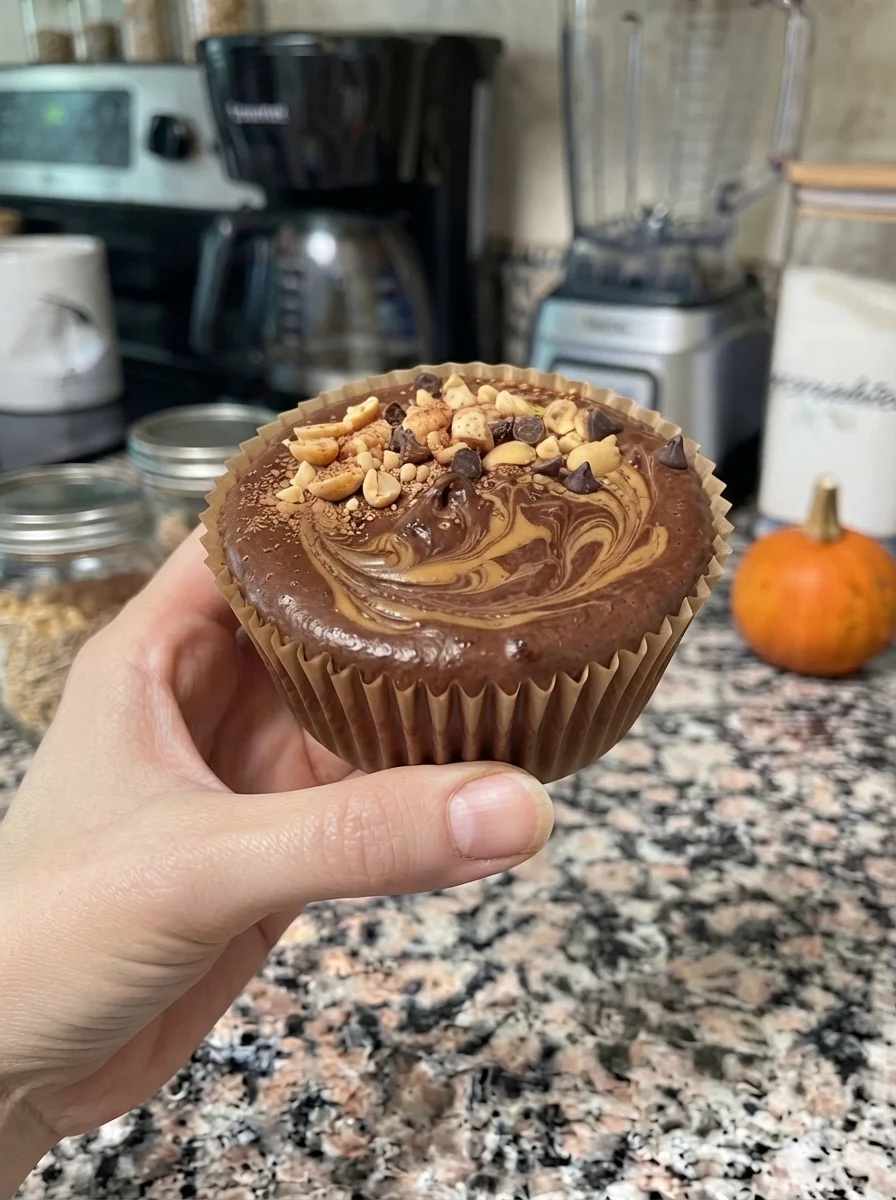
Chocolate and peanut butter make a familiar dessert pairing, and these individual cups bring that combination into a thick, creamy dairy base. Blended cottage cheese and Greek yogurt supply body and tang, cocoa deepens the chocolate flavor, and chocolate protein powder adds both sweetness and protein. A separate peanut butter ribbon gives every serving a rich, nutty contrast.
The recipe needs no baking, crust, or cooked custard. Blend the chocolate mixture, add the swirl, and choose whether to refrigerate it as a spoonable dessert or freeze it for a firmer bite. Small portions make it easy to keep a few ready for snacks or after-dinner treats.
The serving method matters. Refrigeration alone will not reliably turn yogurt and cottage cheese into a freestanding candy. For the chilled version, use jars or ramekins and eat with a spoon. For cups you can peel from silicone molds, freeze until firm, then soften briefly before eating.
Recipe note: This article expands the supplied recipe, which has not been kitchen-tested here. The texture and nutrition depend heavily on the protein powder, dairy products, peanut butter, and sweetener. “Fudge” describes the chocolate-forward flavor and dense consistency; the mixture is not traditional cooked fudge or churned ice cream.
Two Ways to Serve These Cups
Refrigerated Dessert Cups
The refrigerated filling should be thick, creamy, and spoonable. It may firm somewhat as the dry ingredients absorb moisture, but it contains no gelatin, melted-chocolate structure, or other ingredient specifically intended to create a firm set.
Choose small jars, ramekins, or dessert dishes for this version. Chill for at least two hours and leave the filling in its container when serving. Expect a texture closer to a dense chocolate yogurt dessert than an airy whipped mousse.
Frozen Swirl Cups
Freezing allows the portions to hold their shape outside a mold. Silicone muffin cups are particularly useful because they can be peeled away from firm portions.
A one- to two-hour freeze may create a softly frozen cup, but it may not be enough for clean removal. Freeze until actually firm, which can take several hours depending on the freezer, container, and portion depth. Fully frozen cups may be quite hard or slightly icy, so let an individual serving soften briefly before eating.
These are two serving options for the same filling, with different texture expectations. Do not assume a refrigerated cup will behave like a frozen one when you remove its liner.
Ingredients
Chocolate Base
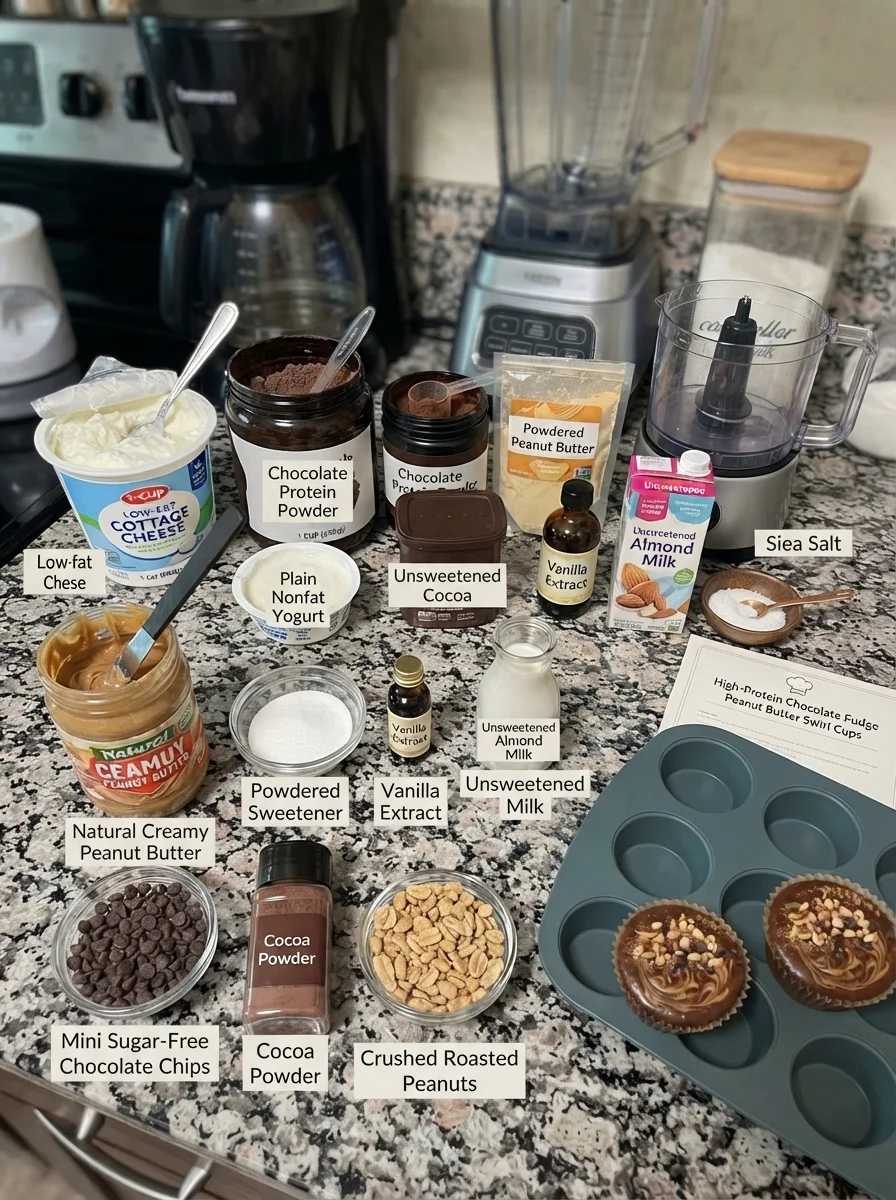
- 1 cup low-fat cottage cheese
- 1 cup plain nonfat Greek yogurt
- 1/2 cup chocolate protein powder, measured level; record the weight listed for your product if calculating nutrition
- 1/4 cup unsweetened cocoa powder
- 3 tablespoons powdered peanut butter
- 3 tablespoons powdered erythritol, or another powdered sweetener adjusted to taste
- 1 teaspoon vanilla extract
- Up to 2 tablespoons unsweetened almond milk, only as needed
- A small pinch of salt
Peanut Butter Swirl
- 1/4 cup natural creamy peanut butter, thoroughly stirred
- 1 tablespoon powdered erythritol or another powdered sweetener adjusted to taste
- 1 to 2 teaspoons unsweetened almond milk, plus a little more only if necessary
- 1/2 teaspoon vanilla extract
Optional Toppings
- 1 tablespoon mini sugar-free chocolate chips, divided among the cups
- A light dusting of cocoa powder
- A small amount of chopped roasted peanuts
Yield: Eight small servings. Use containers with room above the filling for the swirl and any toppings. Exact volume depends on the products and how much air blending introduces.
Ingredient Notes
Cottage Cheese
The cottage cheese provides thickness and a slightly tangy, cheesecake-inspired flavor. Its curds need to be blended smooth before the dry ingredients make the mixture harder to process.
Choose a brand you like the taste of. Blending removes curds but does not remove a strong salty flavor. If there is obvious loose liquid on top, pour off that excess rather than adding it automatically; do not press the cheese completely dry.
Small- and large-curd varieties can both work in suitable equipment. A very watery cottage cheese may produce a softer dessert, while a drier product may require more careful scraping during blending.
Greek Yogurt
Thick, plain Greek yogurt is important for the intended consistency. Regular yogurt contains more free liquid and is not an equivalent substitution. Flavored yogurt changes both sweetness and flavor.
Nonfat yogurt follows the supplied recipe. A full-fat Greek yogurt can make a richer variation, but it will also change calories and may affect how the frozen version feels. Neither choice guarantees an ice-cream-like texture after freezing.
Chocolate Protein Powder
A half cup is a volume measurement, not a standard number of scoops. Different powders have different densities, scoop sizes, sweetness, and protein content. Measure level rather than packing it down.
If you want repeatable nutrition, weigh the amount you use and calculate from that product’s label. Do not assume half a cup always equals two scoops or a particular weight.
Powder type affects texture too. Casein-heavy blends often thicken strongly, whey behaves differently, and plant-based powders can absorb liquid or leave a slightly grainy finish. This recipe has not been verified across all types, so choose a powder you enjoy and add liquid cautiously.
Cocoa Powder
Dutch-process cocoa gives a rounded chocolate flavor, while natural cocoa generally tastes sharper. Either can be used here because this is not a baking recipe that depends on cocoa acidity to activate a leavener.
Break up clumps before blending. The quarter cup is enough to contribute substantial chocolate flavor and absorb moisture, so avoid adding several extra spoonfuls without reassessing consistency and bitterness.
Powdered Peanut Butter
Powdered peanut butter reinforces the peanut flavor in the chocolate base. It is not interchangeable with chocolate protein powder, and it is not the same as regular peanut butter.
Check whether your product includes sugar and salt. Those ingredients affect both the taste and the nutrition calculation. Use the measured quantity for the first batch before deciding that more is needed.
Natural Peanut Butter
Stir natural peanut butter thoroughly in its jar before measuring. A scoop taken from an oily top layer will make a much looser swirl than a dry scoop from the bottom.
The swirl should form a thick ribbon rather than pour like milk. A little almond milk helps loosen it, but adding too much can make it disappear into the chocolate base instead of creating visible lines.
Sweetener
Powdered erythritol is a sugar alcohol sweetener, so this version should not be described simply as “naturally sweetened.” Other powdered products vary in concentration and may be blends rather than pure erythritol.
Use the listed amount as a starting point only for a comparable sweetener. A concentrated product may require far less. Protein powder may already contain sweetener, so taste the blended filling before adding more.
Erythritol can create a cooling sensation and may become more noticeable in frozen food. Some people find sugar alcohols uncomfortable in larger amounts. If you prefer powdered sugar, use it to taste and account for the added sugar and calories.
Equipment
Use a food processor or blender suitable for thick mixtures. A small container often works better than a very large blender jar because the blades can catch the filling more effectively.
You will also need a flexible spatula, a small mixing bowl, measuring tools, and eight serving containers or silicone muffin cups. If using silicone molds, set them on a firm tray before filling so they are easy to move.
For refrigerated portions, jars or ramekins are the simplest choice. For frozen portions, silicone is generally easier to remove than paper liners, which can cling to a partially frozen filling.
How to Make the Chocolate Swirl Cups
1. Blend the Cottage Cheese
Place the cottage cheese in the processor or blender and blend until smooth. Stop and scrape the sides and lid as necessary.
Check the texture on a spoon before proceeding. A few small curds can become more difficult to remove once cocoa, protein powder, and powdered peanut butter thicken the mixture.
If the appliance cannot circulate the cottage cheese, add a spoonful of the measured Greek yogurt to help it move. Do not immediately pour in extra milk.
2. Add the Remaining Base Ingredients
Add the remaining yogurt, chocolate protein powder, cocoa, powdered peanut butter, sweetener, vanilla, and the small pinch of salt. Blend until evenly chocolate-colored with no dry pockets.
Start gently so the powders do not scatter. Several short blending cycles with scraping can work better than running the motor continuously against a mixture that is not moving.
Taste the fully combined base and adjust sweetness in small amounts. The swirl will add richness, so avoid trying to make the chocolate portion overwhelmingly sweet on its own.
3. Check the Consistency
Let the mixture stand for a few minutes so the powders can absorb moisture. It should hold a soft mound on a spoon and spread without running.
If it is too thick to blend or portion, add almond milk one teaspoon at a time, blending briefly after each addition. Use only what is needed, up to the listed two tablespoons.
Remember that adding liquid for easier blending also makes the finished dessert softer. The refrigerator will not remove excess milk, and freezing a watery base can produce a noticeably icier result.
4. Make the Peanut Butter Swirl
In a small bowl, combine the well-stirred peanut butter, powdered sweetener, and vanilla. Add almond milk gradually until the mixture can be spooned in a thick ribbon.
Stir thoroughly before adding more liquid. Peanut butter can briefly thicken when a little water-based liquid is introduced. A few additional drops may help, but a large splash can overshoot the texture.
If the peanut butter is cold and stiff, warm the measured mixture very briefly in a microwave-safe bowl. It should be just softened, not hot, when added to the dairy base.
5. Fill the Containers
Divide the chocolate mixture evenly into eight portions. If precise nutrition matters, weigh the total base and divide it by eight rather than relying on how full the cups look.
For refrigerated desserts, spoon directly into the serving dishes. For frozen cups, fill silicone muffin cups supported on a tray. Smooth the tops gently and leave a little room for the peanut butter.
A piping bag or food-safe bag with a wide corner opening can make filling neater, but it is optional. Thick filling should not require excessive force to portion.
6. Create the Swirl
Divide the peanut butter mixture evenly over the chocolate portions. Add it in a few small lines or dollops rather than one large lump.
Drag a toothpick or skewer through the top in two or three gentle curves. Stop while the colors remain distinct. Repeated stirring will blend everything together and remove the ribbon effect.
For peanut butter in the center as well as on top, add a small part of each portion’s swirl halfway through filling. Keep the overall quantity the same.
7. Chill or Freeze
For spoonable cups, cover and refrigerate for at least two hours. Serve directly from the containers with a spoon.
For removable cups, freeze until firm enough to peel away cleanly from the silicone. Begin checking after about two hours, but allow several hours if needed. Freezer temperature, tray placement, and portion size all affect timing.
Do not pry a soft cup out of its mold because the outside looks set. If it bends, smears, or sticks heavily, it needs more freezing time.
8. Add Toppings and Serve
Chocolate chips can be added before chilling, but chopped peanuts keep their best crunch when added shortly before eating. A light dusting of cocoa is enough; a thick dry coating can taste bitter and dusty.
Let a frozen portion soften for about 10 to 15 minutes, checking earlier in a warm room. It should be comfortable to bite or spoon rather than rock-hard. If you prefer, soften it in the refrigerator for a slower, more controlled change in texture.
Do not leave the whole batch out while one serving softens. Return unused portions to their cold storage promptly.
Tips for a Better First Batch
Blend the dairy thoroughly before thickening it with powders. This is the most useful step for avoiding visible curds.
Use little or no extra milk when the filling already blends well. Thick Greek yogurt and careful liquid additions help both serving styles.
Check sweetness after blending. Different chocolate protein powders can make the same sweetener quantity taste mild or excessive.
Choose the serving container before filling. Spoonable refrigerated desserts belong in dishes; freestanding cups need a sufficiently firm frozen structure.
Keep the swirl thick. A thin peanut butter sauce is more likely to run into the base and look muddy.
Record your protein powder and sweetener. Those two products can change the result enough that repeating the same brands is useful.
Variations
Extra Dark Chocolate
Use a darker-tasting chocolate protein powder and Dutch-process cocoa. Finish with a small amount of dark chocolate shavings rather than adding large quantities of extra dry cocoa.
Chocolate Shell
Spread a thin layer of melted chocolate over a chilled or frozen portion. Let the melted chocolate cool slightly before applying. A thin shell is easier to break with a spoon than a thick cap, and the added chocolate changes the nutrition.
Peanut Crunch
Sprinkle with a small measured amount of chopped roasted peanuts before serving. Salted peanuts also add salt, so keep the base’s pinch modest.
Marbled Filling
Reserve a little of the chocolate base and layer it with the peanut butter mixture while portioning. Use a few gentle passes of a skewer for a deeper marbled appearance without blending the two completely.
Alternative Sweeteners
Powdered sugar or another suitable sweetener can be adjusted to taste. Substitutions are not automatically equal in sweetness or volume, and liquid sweeteners add moisture. Begin cautiously rather than replacing every tablespoon without checking the label.
Storage and Meal Prep
Keep refrigerated portions covered at 40°F or below and use within 3 to 4 days, provided the ingredients were fresh and handled properly. Respect any earlier storage limits from opened dairy products; mixing them into dessert does not restart their shelf life.
For frozen storage, freeze the cups until firm, then place them in an airtight freezer-safe container with parchment between layers. Use within two months for best quality. Protecting the surface from air helps reduce freezer burn and absorbed odors.
The texture may become slightly grainy or watery if a frozen cup fully thaws. That is a quality difference associated with the dairy base, not a reason to promise that freezing preserves the refrigerated texture unchanged.
Soften only the portion you plan to eat. Repeated thawing and refreezing can worsen texture and complicate safe handling. Keep toppings separate when possible.
For transport, use an insulated bag with ice packs or frozen gel packs. Refrigerated dairy desserts should not sit without cold holding for more than two hours, or more than one hour when temperatures exceed 90°F.
Discard cups with mold, an unusual odor, or uncertain time out of refrigeration. Do not taste a questionable portion to assess whether it is safe.
Nutrition Estimates and Portion Size
The original estimates of 155 calories and 15 grams of protein per cup may be plausible with some products, but they are not universal. The half cup of protein powder is the largest source of uncertainty because volume does not establish a consistent weight or protein quantity.
As an illustration, a full batch providing 96 to 128 grams of protein would give 12 to 16 grams in each of eight equal portions. A product with less protein per measured half cup will produce less protein per cup, even when the finished dessert looks identical.
A rough planning range is approximately 130 to 180 calories per portion without optional toppings, depending on the powder, dairy, peanut butter, and sweetener. This range is not a verified nutrition analysis. Weigh the powder and calculate from every ingredient label before publishing precise numbers.
Carbohydrate estimates require particular care when using sugar alcohols. Total carbohydrates, sugar alcohols, fiber, and any calculated net-carbohydrate figure are different measurements. Do not present one as another or assume that sugar-free chocolate means the entire dessert is sugar-free.
For consistent portions, divide the chocolate base, peanut butter swirl, and toppings evenly. One cup with a large peanut butter spoonful will not have the same nutrition as one with a thin ribbon.
Troubleshooting
The Refrigerated Cups Will Not Unmold
That is expected with a soft dairy filling and no setting agent. Serve them in their dishes with spoons, or freeze until firm enough to remove cleanly.
The Frozen Cups Are Very Hard
They contain substantial water from yogurt and cottage cheese. Allow an individual portion to soften before eating. The recipe is not formulated to remain scoopable straight from the freezer like commercial ice cream.
The Filling Is Grainy
Remaining cottage cheese curds or the protein powder may be responsible. Blend the dairy first, then allow the powders time to hydrate. A naturally gritty powder may not become perfectly smooth despite additional blending.
The Base Is Too Thick
Add milk in small increments and scrape the blender rather than flooding the mixture with liquid. Some powder blends thicken significantly after standing.
The Swirl Disappears
It may have been too thin or stirred too much. Use a thick ribbon and only a few movements of the skewer.
The Dessert Has a Cooling Aftertaste
Erythritol can produce that sensation, particularly in a cold dessert. A different sweetener may suit you better, but use its own conversion guidance and recalculate nutrition as needed.
Frequently Asked Questions
Can I Make Four Larger Cups?
Yes. Divide the same batch into four portions and use larger serving dishes. Each portion then contains twice the ingredients of an eight-way serving, and frozen portions may take longer to become firm.
Is This Traditional Fudge?
No. It is a chocolate dairy dessert with a dense consistency and a frozen serving option. Traditional fudge has a different ingredient structure and preparation method.
Can I Leave Out the Protein Powder?
Not without changing the flavor, sweetness, moisture balance, and protein content. A powder-free version needs separate development rather than a simple omission.
Can I Use Regular Peanut Butter Instead of Powdered in the Base?
It would add more fat and change the amount of dry material that absorbs moisture. That is not an equivalent tablespoon-for-tablespoon substitution.
Is It Allergy-Friendly?
It contains milk and peanuts, and almond milk introduces tree nuts. Protein powder and chocolate may contain additional allergens. Check all labels and do not assume the recipe suits a particular allergy without reviewing every product.
Print
High-Protein Chocolate Fudge Peanut Butter Swirl Cups
Description
Yield: Eight small portions
Prep time: Approximately 15 minutes
Refrigerator chill: At least two hours
Frozen option: Freeze until firm, often several hours; soften an individual portion before serving
Refrigerated total: Approximately two hours 15 minutes
Method: No-bake, blended and chilled or frozen
Ingredients
Chocolate Base
- 1 cup low-fat cottage cheese
- 1 cup plain nonfat Greek yogurt
- 1/2 cup chocolate protein powder, measured level; record the weight listed for your product if calculating nutrition
- 1/4 cup unsweetened cocoa powder
- 3 tablespoons powdered peanut butter
- 3 tablespoons powdered erythritol, or another powdered sweetener adjusted to taste
- 1 teaspoon vanilla extract
- Up to 2 tablespoons unsweetened almond milk, only as needed
- A small pinch of salt
Peanut Butter Swirl
- 1/4 cup natural creamy peanut butter, thoroughly stirred
- 1 tablespoon powdered erythritol or another powdered sweetener adjusted to taste
- 1 to 2 teaspoons unsweetened almond milk, plus a little more only if necessary
- 1/2 teaspoon vanilla extract
Optional Toppings
- 1 tablespoon mini sugar-free chocolate chips, divided among the cups
- A light dusting of cocoa powder
- A small amount of chopped roasted peanuts
Yield: Eight small servings. Use containers with room above the filling for the swirl and any toppings. Exact volume depends on the products and how much air blending introduces.
Instructions
- Blend 1 cup cottage cheese until smooth.
- Add 1 cup Greek yogurt, 1/2 cup chocolate protein powder, 1/4 cup cocoa, 3 tablespoons powdered peanut butter, 3 tablespoons powdered erythritol or equivalent sweetener to taste, 1 teaspoon vanilla, and a pinch of salt. Blend thoroughly.
- Add up to 2 tablespoons almond milk only as needed, a teaspoon at a time.
- Mix 1/4 cup well-stirred peanut butter with 1 tablespoon powdered sweetener, 1/2 teaspoon vanilla, and 1–2 teaspoons almond milk to form a thick ribbon.
- Divide the chocolate filling into eight serving dishes for refrigeration or eight supported silicone cups for freezing. Divide the swirl evenly and marble gently.
- Refrigerate at least two hours and serve with spoons, or freeze until firm enough to unmold and soften briefly before eating.
- Add optional chips, peanuts, or cocoa before serving.
Storage: Refrigerate covered for up to 3–4 days at 40°F or below, or freeze for up to two months for best quality. Freezing may change the dairy texture.
Estimated nutrition: Approximately 130–180 calories and 12–16 grams of protein per eight-way portion without optional toppings, depending on products. Verify using measured ingredient weights and package labels.