
High-Protein Blueberry Lemon Bread
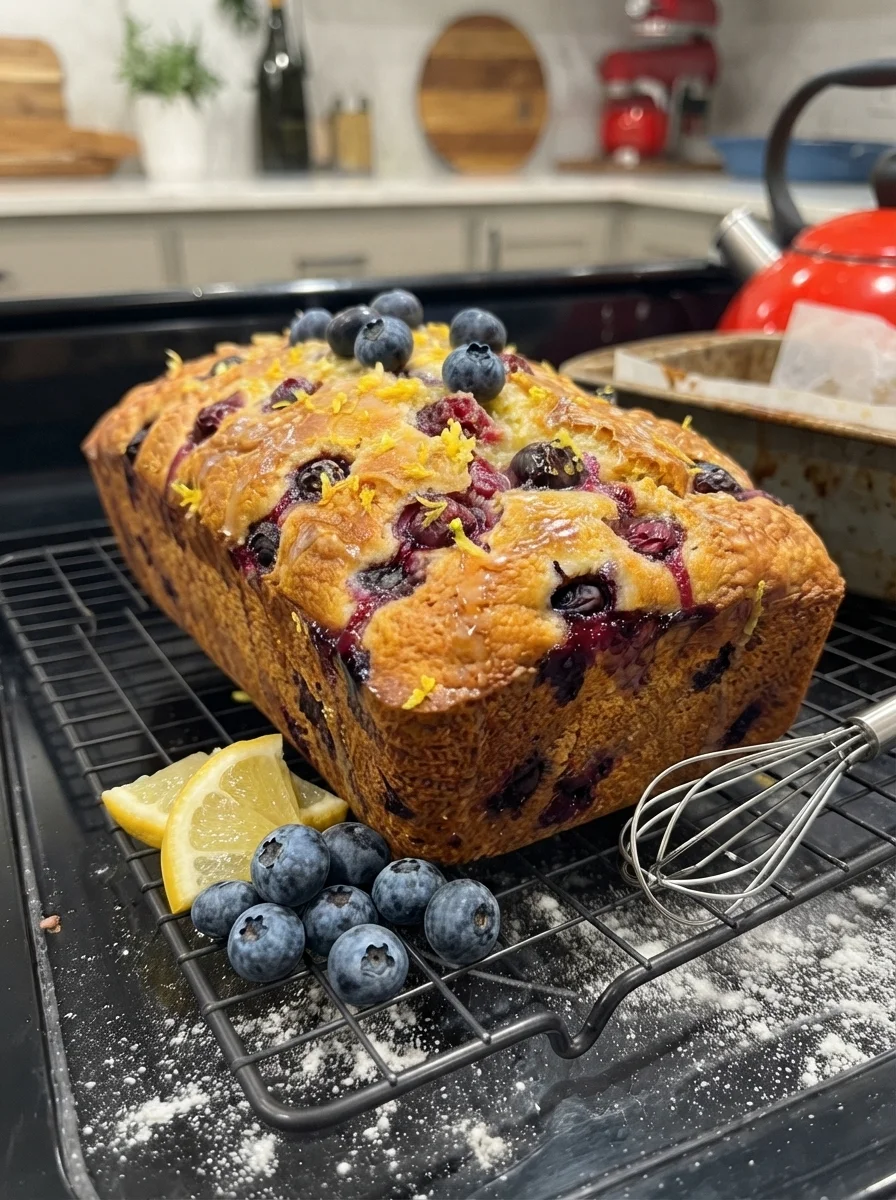
Soft, moist, bright, and bursting with juicy blueberries, this High-Protein Blueberry Lemon Bread combines fresh citrus flavor with a satisfying protein boost in an easy homemade loaf.
Greek yogurt, eggs, and protein powder add protein while helping create a tender crumb, and applesauce provides additional moisture without requiring a large amount of added fat. Fresh lemon juice and zest give the loaf its vibrant citrus flavor, while blueberries create sweet, juicy pockets throughout every slice.
With approximately 10–12 grams of protein per slice, depending on the ingredients used, this blueberry lemon loaf is a convenient option for breakfast, meal prep, snacks, or an afternoon treat.
Enjoy it plain, slightly warm, or finish the completely cooled loaf with the optional lemon glaze for an extra burst of sweet citrus flavor.
Why You’ll Love This High-Protein Blueberry Lemon Bread
Protein-packed. Greek yogurt, eggs, and protein powder contribute approximately 10–12 grams of protein per slice, depending on the specific products used.
Soft and moist. Greek yogurt and applesauce help prevent the protein-enriched batter from becoming overly dry.
Loaded with blueberries. Every slice has juicy bursts of sweet blueberry flavor.
Bright lemon flavor. Both fresh lemon juice and zest are used for a noticeable citrus flavor.
Great for meal prep. The loaf keeps well in the refrigerator and individual slices can be frozen.
Easy to make. No mixer, yeast, or complicated technique is required.
Optional glaze. Keep it simple without the glaze or add a quick lemon drizzle for a sweeter finish.
Perfect for breakfast or snacks. It’s easy to portion into individual slices and keep ready in the refrigerator.
What Makes This Blueberry Lemon Bread High in Protein?
The recipe uses several ingredients that contribute protein rather than relying entirely on protein powder.
Protein Powder
A full 1/2 cup of vanilla or unflavored protein powder supplements the regular flour.
The exact amount of protein it contributes depends heavily on the brand and type used.
Greek Yogurt
One cup of plain Greek yogurt adds both protein and moisture.
This is especially useful in protein baking because protein powder can sometimes make baked goods dry when too much is used.
Eggs
Two large eggs contribute additional protein while also providing structure, richness, and moisture.
Together, these ingredients create a loaf that’s more protein-rich than conventional blueberry lemon quick bread while still maintaining a soft, tender texture.
Ingredients for High-Protein Blueberry Lemon Bread 🫐🍋
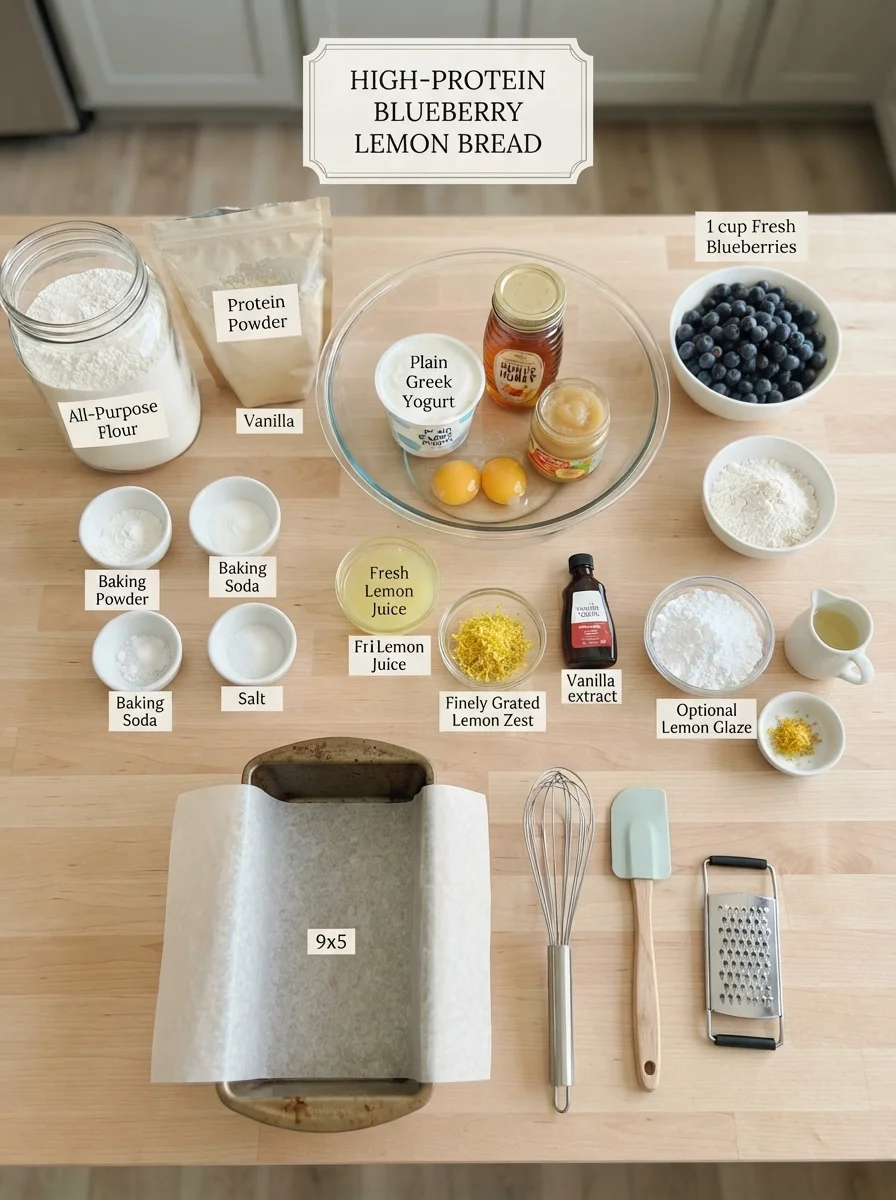
For the Bread
- 1 1/2 cups all-purpose flour
- 1/2 cup vanilla or unflavored protein powder
- 1 tsp baking powder
- 1/2 tsp baking soda
- 1/4 tsp salt
- 1 cup plain Greek yogurt
- 2 large eggs
- 1/3 cup honey or maple syrup
- 1/4 cup unsweetened applesauce
- 2 tbsp fresh lemon juice
- 1 tbsp finely grated lemon zest
- 1 tsp vanilla extract
- 1 cup fresh or frozen blueberries
- 1 tbsp all-purpose flour, for tossing the blueberries
Optional Lemon Glaze 🍋
- 1/2 cup powdered sugar
- 1–2 tbsp fresh lemon juice
- 1/2 tsp finely grated lemon zest
Ingredient Notes
All-purpose flour: Provides the primary structure for the loaf. Measure carefully to avoid adding too much, which can produce dry bread.
Protein powder: Vanilla protein powder adds a little extra sweetness and vanilla flavor, while unflavored protein powder keeps the lemon and blueberry flavors more prominent. Different protein powders absorb moisture differently, so the final texture can vary somewhat by brand and formulation.
Baking powder and baking soda: These provide the leavening needed to help the loaf rise despite the heavier Greek yogurt and protein powder.
Greek yogurt: Adds protein, moisture, and a slight tang that pairs naturally with lemon. Plain yogurt keeps the sweetness under control.
Eggs: Provide protein, structure, and richness while helping bind the batter.
Honey or maple syrup: Either sweetener works. Honey provides a slightly richer sweetness, while maple syrup contributes its own subtle flavor.
Unsweetened applesauce: Adds moisture and mild natural sweetness without making the bread excessively heavy.
Fresh lemon juice: Provides acidity and bright citrus flavor.
Lemon zest: This is especially important for strong lemon flavor because the aromatic oils are concentrated in the outer yellow portion of the peel.
Vanilla extract: Softens the sharper citrus notes and complements the blueberries.
Blueberries: Fresh or frozen blueberries can be used. If using frozen berries, add them directly from frozen rather than thawing first.
Flour for the blueberries: A light coating helps absorb surface moisture and can help distribute the berries more evenly through the batter.
How to Make High-Protein Blueberry Lemon Bread
Step 1: Preheat the Oven 🔥
Preheat your oven to 350°F.
Grease a 9×5-inch loaf pan and line it with parchment paper.
Leave some parchment extending above the long sides of the pan so you can easily lift the baked loaf out.
Step 2: Combine the Dry Ingredients
In a medium mixing bowl, add:
- 1 1/2 cups all-purpose flour
- 1/2 cup protein powder
- 1 teaspoon baking powder
- 1/2 teaspoon baking soda
- 1/4 teaspoon salt
Whisk thoroughly.
This distributes the leavening and protein powder evenly throughout the flour before they’re introduced to the wet ingredients.
Set aside.
Step 3: Mix the Wet Ingredients 🍋
In a separate large bowl, combine:
- 1 cup plain Greek yogurt
- 2 large eggs
- 1/3 cup honey or maple syrup
- 1/4 cup unsweetened applesauce
- 2 tablespoons fresh lemon juice
- 1 tablespoon finely grated lemon zest
- 1 teaspoon vanilla extract
Whisk until smooth and evenly combined.
Make sure there are no large pockets of Greek yogurt remaining.
Step 4: Combine the Wet and Dry Mixtures
Gradually add the dry ingredients to the wet mixture.
Use a spatula or wooden spoon to gently fold everything together.
Stop mixing as soon as the flour is incorporated.
The batter should be thick but still easily spreadable.
Avoid excessive stirring because overmixing can produce a denser, tougher loaf.
Step 5: Prepare the Blueberries 🫐
Place 1 cup blueberries in a small bowl.
Sprinkle with 1 tablespoon all-purpose flour and gently toss until the berries have a very light coating.
If you’re using frozen blueberries, don’t thaw them first.
Frozen berries release considerable juice as they thaw, which can streak the batter and introduce extra moisture before baking.
Step 6: Fold in the Blueberries
Reserve a small handful of blueberries for decorating the top if desired.
Add the remaining berries to the batter.
Using a spatula, gently fold them in with only a few strokes.
Avoid crushing the berries, especially if you’re using fresh blueberries.
Step 7: Fill the Loaf Pan
Transfer the batter into the prepared 9×5-inch loaf pan.
Spread it evenly and smooth the top with a spatula.
Scatter the reserved blueberries over the surface.
Press them very lightly into the batter so they stay in place while baking.
Step 8: Bake 🍞
Bake at 350°F for approximately 45–55 minutes.
Begin checking the loaf around 45 minutes.
The bread is ready when the center appears set and a toothpick inserted near the middle comes out with only a few moist crumbs rather than wet batter.
Because protein powder, yogurt, berries, ovens, and loaf pans vary, the exact baking time may differ slightly.
Step 9: Protect the Top if Necessary
If the bread is browning too quickly before the center finishes baking, loosely cover the top with aluminum foil.
Continue baking until the center is completely set.
This is especially useful during the final 10–15 minutes of baking.
Step 10: Cool in the Pan
Remove the loaf from the oven.
Allow it to cool in the pan for approximately 10–15 minutes.
This gives the freshly baked loaf time to firm slightly before being moved.
Step 11: Transfer to a Cooling Rack
Use the parchment overhang to carefully lift the loaf from the pan.
Transfer it to a wire rack.
Allow the bread to cool completely before slicing or glazing.
Cooling is important because the interior continues setting as the loaf returns to room temperature.
Step 12: Make the Optional Lemon Glaze 🍋
Once the bread is completely cool, combine:
- 1/2 cup powdered sugar
- 1 tablespoon fresh lemon juice
- 1/2 teaspoon lemon zest
Whisk until smooth.
If the glaze is too thick, gradually add additional lemon juice until it reaches a drizzleable consistency.
Don’t add too much liquid at once.
Step 13: Glaze and Serve
Drizzle the lemon glaze across the completely cooled loaf.
Allow it to set for several minutes.
Slice the bread into approximately 10 portions and serve.
Time and Yield
Prep time: 15 minutes
Cook time: approximately 50 minutes
Total time: approximately 1 hour 5 minutes, plus cooling
Yield: 1 loaf
Servings: approximately 10 slices
Estimated calories: approximately 190 calories per slice
Estimated protein: approximately 10–12 grams per slice
The exact calorie and protein content will vary substantially depending on the Greek yogurt, protein powder, sweetener, and whether the optional glaze is included.
Tips for the Best High-Protein Blueberry Lemon Bread
Don’t overmeasure the flour. Too much flour can make protein-enriched baked goods especially dry.
Choose a protein powder you enjoy. Its flavor will be noticeable in the finished bread.
Use fresh lemon zest. Zest provides a stronger lemon aroma than juice alone.
Don’t overmix the batter. Stir only until the dry ingredients disappear.
Coat the blueberries lightly with flour. This helps manage surface moisture and encourages better distribution.
Don’t thaw frozen blueberries. Fold them directly into the batter from frozen.
Fold the berries gently. Aggressive mixing can crush them and turn the batter purple.
Check the loaf before removing it. Protein breads can look browned on top before the center is fully baked.
Use foil if necessary. Loosely covering the loaf prevents excessive browning while the center finishes.
Cool completely before slicing. The crumb becomes more stable as it cools.
Glaze only when cool. Glaze applied to warm bread will melt and soak into the surface instead of forming a visible drizzle.
How Protein Powder Affects Baking
Protein powder doesn’t behave exactly like regular flour.
Depending on whether you’re using whey, casein, a blend, or a plant-based protein, it can absorb different amounts of liquid and produce slightly different textures.
Using too much protein powder can result in bread that’s:
- Dry
- Rubbery
- Dense
- Chalky
This recipe balances the 1/2 cup protein powder with moisture-rich ingredients such as:
- Greek yogurt
- Eggs
- Applesauce
- Honey or maple syrup
- Lemon juice
That’s why it’s best to preserve the ingredient ratios rather than dramatically increasing the protein powder.
If you change protein powder brands, you may notice a slight difference in batter thickness or finished texture.
Fresh vs. Frozen Blueberries
Both work well in this recipe.
Fresh Blueberries
Fresh berries are easy to fold into the batter and are less likely to streak the crumb.
Choose firm blueberries and dry them thoroughly after washing.
Frozen Blueberries
Frozen blueberries are convenient and allow you to make the bread year-round.
For the best results:
Don’t thaw them first.
Add them directly from the freezer after lightly tossing them with flour.
Thawed berries release more juice and can make the batter wetter and more heavily streaked.
Frozen berries may also cause the loaf to require slightly more baking time.
Why Use Greek Yogurt?
Greek yogurt serves several purposes in this bread.
First, it contributes protein.
Second, it provides significant moisture, which is useful when baking with protein powder.
Third, its slight tang complements both the lemon and blueberries.
Finally, the yogurt contributes to the loaf’s tender texture without requiring a large amount of butter or oil.
For the most predictable result, use plain Greek yogurt rather than flavored yogurt.
Different fat percentages can work, although the exact richness and moisture of the loaf may vary.
Why Lemon Zest Matters 🍋
If you want bread that actually tastes noticeably lemony, don’t rely only on lemon juice.
Much of a lemon’s aromatic flavor comes from oils concentrated in the yellow outer peel.
Finely grated lemon zest distributes those fragrant oils throughout the batter.
When zesting the lemon, remove only the bright yellow exterior and avoid grating deeply into the white pith underneath, which can taste bitter.
Using both fresh lemon juice and lemon zest provides a fuller citrus flavor than either ingredient alone.
Serving Ideas
Breakfast 🫐
Serve a slice alongside Greek yogurt, eggs, or fresh fruit.
Afternoon Snack
Enjoy a chilled or room-temperature slice when you want something sweet with additional protein.
Meal Prep
Cut the entire loaf into individual portions and store them in the refrigerator for quick grab-and-go snacks.
With Greek Yogurt
Serve a slice with an extra spoonful of Greek yogurt and fresh blueberries.
With Nut Butter
Spread a little almond or peanut butter over an unglazed slice for a richer snack.
Coffee or Tea
The lemon-blueberry flavor pairs especially well with coffee or hot tea.
Brunch
Add the loaf to a brunch spread with eggs, fruit, yogurt, and other breakfast favorites.
Easy Flavor Variations
Raspberry Lemon Protein Bread
Replace the blueberries with raspberries.
Fold them carefully because raspberries are particularly delicate.
Mixed Berry Lemon Bread
Use a combination of blueberries and raspberries for additional berry flavor.
Blueberry Vanilla Protein Bread
Reduce the emphasis on lemon and use vanilla protein powder for a more pronounced vanilla-blueberry flavor.
Blueberry Almond Bread
Add a small amount of almond extract and sprinkle sliced almonds over the top before baking.
Lemon Poppy Seed Blueberry Bread
Add poppy seeds to the batter for a classic lemon-poppy flavor alongside the blueberries.
Extra-Lemon Bread 🍋
Increase the lemon zest for a stronger citrus aroma rather than adding excessive lemon juice, which could alter the batter’s moisture balance.
Glaze-Free Meal Prep Version
Skip the powdered-sugar glaze for a simpler loaf that’s easier to pack and store.
Troubleshooting Common Problems
Why is my protein bread dry?
The loaf may have been overbaked, too much flour may have been measured, or your protein powder may absorb more moisture than the one used to formulate the recipe.
Begin checking near the lower end of the baking range.
Why is my bread dense?
Overmixing is one common cause.
Once the dry ingredients are added, stir only until they’re incorporated.
The type of protein powder can also affect density.
Why did my blueberries sink?
Some sinking can naturally occur.
Lightly coating the blueberries with flour and using a sufficiently thick batter can help keep them more evenly distributed.
Why did my batter turn purple?
The blueberries probably broke while being mixed.
This happens especially easily with thawed frozen berries.
Fold the fruit gently and use frozen berries directly from the freezer.
Why is the middle still wet?
The loaf needs additional baking time.
Because the recipe contains Greek yogurt, applesauce, and juicy berries, the center can take longer to set than the browned exterior suggests.
Loosely cover the top with foil and continue baking.
Why is the top getting too dark?
Cover the loaf loosely with foil during the final portion of baking.
This protects the surface while allowing the center to finish cooking.
Why does my bread taste chalky?
The protein powder itself may be responsible.
Some protein powders have a stronger flavor or chalkier texture when baked.
Using a protein powder that you already enjoy and avoiding excessive amounts can improve the result.
Why is my glaze too thick?
Whisk in additional lemon juice a very small amount at a time.
Why is my glaze too thin?
Add a little more powdered sugar until it reaches your desired consistency.
Why did my glaze disappear into the loaf?
The bread was probably still warm.
Always allow it to cool completely before glazing.
Storage Information 🥡
Because this bread contains Greek yogurt, eggs, and fresh fruit, refrigerator storage is recommended.
Allow the loaf to cool completely.
Place it in an airtight container and refrigerate for up to 5 days.
You can store the loaf whole or pre-slice it for easier meal prep.
If the bread has been glazed, place parchment between stacked slices to prevent sticking.
Freezer Instructions ❄️
High-Protein Blueberry Lemon Bread freezes well.
For convenient individual portions:
- Cool the loaf completely.
- Slice it into individual servings.
- Wrap each slice securely.
- Place the wrapped slices in a freezer-safe bag or container.
- Freeze for up to 3 months.
Thaw individual slices overnight in the refrigerator or at room temperature.
For the best presentation, consider freezing the bread without the lemon glaze and adding fresh glaze after thawing.
Frequently Asked Questions
How much protein is in High-Protein Blueberry Lemon Bread?
Approximately 10–12 grams per slice, based on 10 slices, although the exact amount depends significantly on your protein powder and Greek yogurt.
Can I use vanilla protein powder?
Yes. Vanilla protein powder works especially well with blueberries and lemon.
Can I use unflavored protein powder?
Yes. Unflavored protein powder allows the fresh lemon and blueberry flavors to stand out more strongly.
Can I use frozen blueberries?
Absolutely. Add them directly from frozen rather than thawing them first.
Can I use fresh blueberries?
Yes. Fresh blueberries work beautifully. Wash and dry them thoroughly before tossing them with flour.
Why toss blueberries in flour?
A light flour coating helps absorb surface moisture and may help the berries stay more evenly distributed throughout the batter.
Can I substitute maple syrup for honey?
Yes. The recipe works with either 1/3 cup honey or maple syrup.
What does applesauce do in the bread?
Unsweetened applesauce adds moisture and mild sweetness, helping keep the loaf tender.
Can I skip the lemon glaze?
Yes. The glaze is completely optional.
The loaf already contains lemon juice and zest, so it still has plenty of blueberry-lemon flavor without the glaze.
Can I add more protein powder?
It’s better not to increase it significantly without adjusting the rest of the recipe. Protein powder absorbs moisture differently from flour and too much can make the bread dry or rubbery.
How do I know when the loaf is finished baking?
The center should look set and a toothpick inserted into the middle should come out without wet batter. A few moist crumbs are fine.
Why should I cool the bread before slicing?
The crumb continues setting as the loaf cools. Slicing too early can cause compression or make the center seem wetter than it actually is.
How long does the bread last?
Store it in an airtight container in the refrigerator for up to 5 days.
Can I freeze High-Protein Blueberry Lemon Bread?
Yes. Individual slices can be frozen for up to 3 months.
Final Thoughts
This High-Protein Blueberry Lemon Bread brings together juicy blueberries, fresh lemon, and a soft, moist crumb in a convenient protein-enriched loaf.
The combination of Greek yogurt, eggs, and protein powder provides approximately 10–12 grams of protein per slice, while applesauce helps keep the bread tender and moist.
Fresh lemon juice and zest deliver plenty of bright citrus flavor, and every slice is dotted with sweet blueberries.
Enjoy it plain for an easy meal-prep breakfast or snack, or drizzle the completely cooled loaf with the optional lemon glaze when you want a sweeter finish.
With easy refrigerator storage and freezer-friendly slices, this blueberry lemon bread is an especially convenient recipe to bake once and enjoy throughout the week.
Print
High-Protein Blueberry Lemon Bread
- Total Time: approximately 1 hour 5 minutes, plus cooling
Ingredients
For the Bread
- 1 1/2 cups all-purpose flour
- 1/2 cup vanilla or unflavored protein powder
- 1 tsp baking powder
- 1/2 tsp baking soda
- 1/4 tsp salt
- 1 cup plain Greek yogurt
- 2 large eggs
- 1/3 cup honey or maple syrup
- 1/4 cup unsweetened applesauce
- 2 tbsp fresh lemon juice
- 1 tbsp finely grated lemon zest
- 1 tsp vanilla extract
- 1 cup fresh or frozen blueberries
- 1 tbsp all-purpose flour, for tossing the blueberries
Optional Lemon Glaze 🍋
- 1/2 cup powdered sugar
- 1–2 tbsp fresh lemon juice
- 1/2 tsp finely grated lemon zest
Instructions
Step 1: Preheat the Oven 🔥
Preheat your oven to 350°F.
Grease a 9×5-inch loaf pan and line it with parchment paper.
Leave some parchment extending above the long sides of the pan so you can easily lift the baked loaf out.
Step 2: Combine the Dry Ingredients
In a medium mixing bowl, add:
- 1 1/2 cups all-purpose flour
- 1/2 cup protein powder
- 1 teaspoon baking powder
- 1/2 teaspoon baking soda
- 1/4 teaspoon salt
Whisk thoroughly.
This distributes the leavening and protein powder evenly throughout the flour before they’re introduced to the wet ingredients.
Set aside.
Step 3: Mix the Wet Ingredients 🍋
In a separate large bowl, combine:
- 1 cup plain Greek yogurt
- 2 large eggs
- 1/3 cup honey or maple syrup
- 1/4 cup unsweetened applesauce
- 2 tablespoons fresh lemon juice
- 1 tablespoon finely grated lemon zest
- 1 teaspoon vanilla extract
Whisk until smooth and evenly combined.
Make sure there are no large pockets of Greek yogurt remaining.
Step 4: Combine the Wet and Dry Mixtures
Gradually add the dry ingredients to the wet mixture.
Use a spatula or wooden spoon to gently fold everything together.
Stop mixing as soon as the flour is incorporated.
The batter should be thick but still easily spreadable.
Avoid excessive stirring because overmixing can produce a denser, tougher loaf.
Step 5: Prepare the Blueberries 🫐
Place 1 cup blueberries in a small bowl.
Sprinkle with 1 tablespoon all-purpose flour and gently toss until the berries have a very light coating.
If you’re using frozen blueberries, don’t thaw them first.
Frozen berries release considerable juice as they thaw, which can streak the batter and introduce extra moisture before baking.
Step 6: Fold in the Blueberries
Reserve a small handful of blueberries for decorating the top if desired.
Add the remaining berries to the batter.
Using a spatula, gently fold them in with only a few strokes.
Avoid crushing the berries, especially if you’re using fresh blueberries.
Step 7: Fill the Loaf Pan
Transfer the batter into the prepared 9×5-inch loaf pan.
Spread it evenly and smooth the top with a spatula.
Scatter the reserved blueberries over the surface.
Press them very lightly into the batter so they stay in place while baking.
Step 8: Bake 🍞
Bake at 350°F for approximately 45–55 minutes.
Begin checking the loaf around 45 minutes.
The bread is ready when the center appears set and a toothpick inserted near the middle comes out with only a few moist crumbs rather than wet batter.
Because protein powder, yogurt, berries, ovens, and loaf pans vary, the exact baking time may differ slightly.
Step 9: Protect the Top if Necessary
If the bread is browning too quickly before the center finishes baking, loosely cover the top with aluminum foil.
Continue baking until the center is completely set.
This is especially useful during the final 10–15 minutes of baking.
Step 10: Cool in the Pan
Remove the loaf from the oven.
Allow it to cool in the pan for approximately 10–15 minutes.
This gives the freshly baked loaf time to firm slightly before being moved.
Step 11: Transfer to a Cooling Rack
Use the parchment overhang to carefully lift the loaf from the pan.
Transfer it to a wire rack.
Allow the bread to cool completely before slicing or glazing.
Cooling is important because the interior continues setting as the loaf returns to room temperature.
Step 12: Make the Optional Lemon Glaze 🍋
Once the bread is completely cool, combine:
- 1/2 cup powdered sugar
- 1 tablespoon fresh lemon juice
- 1/2 teaspoon lemon zest
Whisk until smooth.
If the glaze is too thick, gradually add additional lemon juice until it reaches a drizzleable consistency.
Don’t add too much liquid at once.
Step 13: Glaze and Serve
Drizzle the lemon glaze across the completely cooled loaf.
Allow it to set for several minutes.
Slice the bread into approximately 10 portions and serve.
- Prep Time: 15 minutes
- Cook Time: approximately 50 minutes
Nutrition
- Serving Size: approximately 10 slices
- Calories: approximately 190 calories per slice