
Fluffy Keto Greek Yogurt Pancakes
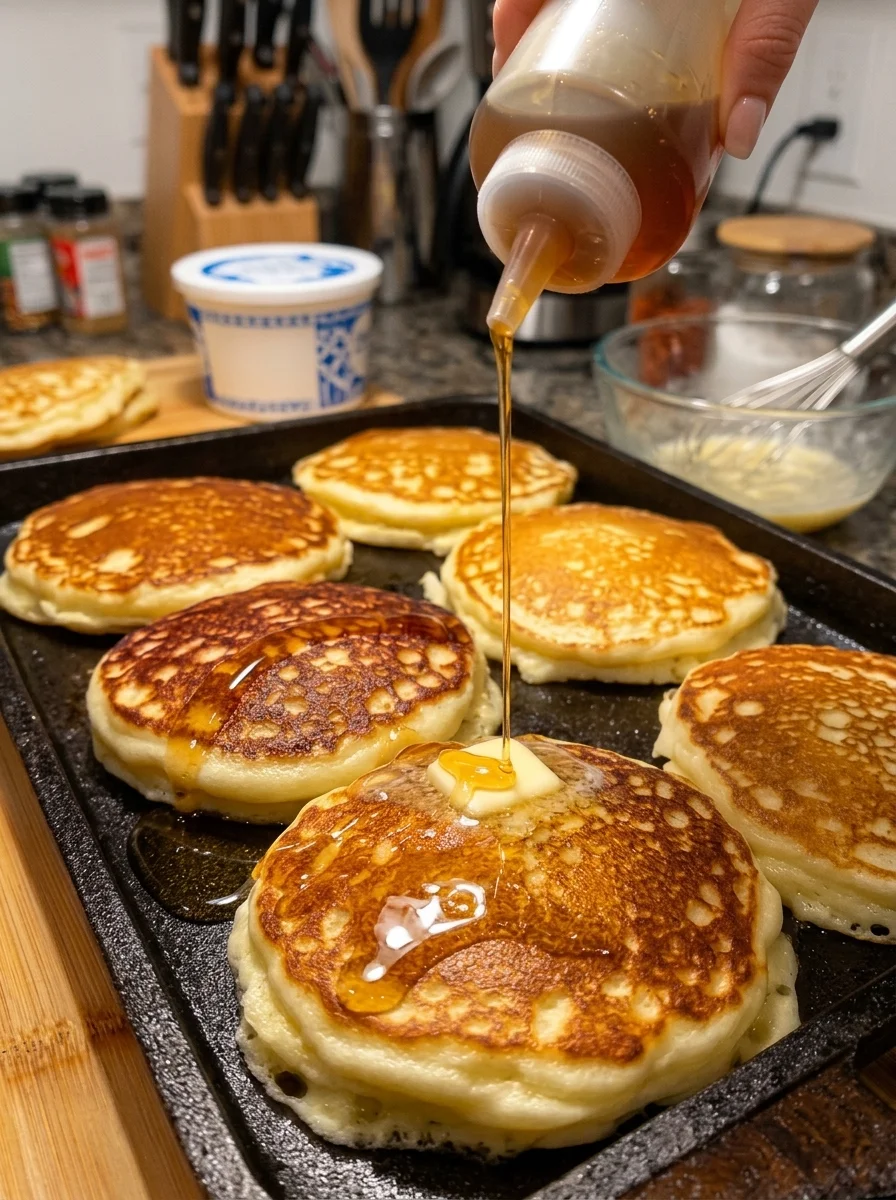
These Fluffy Keto Greek Yogurt Pancakes bring together finely ground almond flour, thick Greek yogurt, and eggs for a small batch of tender, lightly sweet pancakes. A little vanilla adds warmth, while optional cinnamon gives them a cozy breakfast flavor. Serve them with butter, a few berries, or your favorite sugar-free maple-flavored syrup.
The batter mixes in one bowl and needs only a short rest before cooking. The key is making small pancakes and cooking them gently so their delicate centers have time to set before you flip them.
Expect soft, moist pancakes with a lightly nutty flavor and a gentle lift. Almond flour does not behave like wheat flour, so these will be more delicate and less springy than a traditional diner-style stack.
Recipe at a Glance
- Preparation: 5 minutes
- Batter rest: 3–5 minutes
- Cooking: Approximately 10–15 minutes, depending on skillet size
- Total time: Approximately 20–25 minutes
- Servings: 2
- Yield: About 6–8 small pancakes, using approximately 2 tablespoons of batter each
- Method: Stovetop
The rest period is included in the total time. A smaller skillet may require additional batches.
Why You’ll Love These Pancakes
- A small ingredient list. Almond flour, yogurt, and eggs provide the base.
- No blender required. A bowl and whisk are enough.
- Easy to portion. Small pancakes are convenient for breakfast and reheating.
- Mildly sweet. You can adjust the sweetener to suit your toppings.
- A lower-carb alternative. Almond flour replaces wheat flour, while unsweetened yogurt keeps added sugar out of the basic batter.
“Keto” suitability depends on the brands, portion size, toppings, and your daily carbohydrate target. Check your ingredient labels rather than assuming every sugar-free product has the same carbohydrate content.
What Greek Yogurt Does in Pancake Batter
Greek yogurt adds moisture, a little tang, and some protein. Its thick consistency helps create a spoonable batter without needing much additional liquid.
Eggs provide much of the structure because almond flour contains no gluten. Baking powder adds lift, while the almond flour contributes richness and a tender crumb. These ingredients work best when the pancakes stay small enough to flip without bending or breaking.
This article expands the supplied recipe with practical cooking guidance; it does not represent an independently kitchen-tested formula.
Ingredients
For the Pancakes
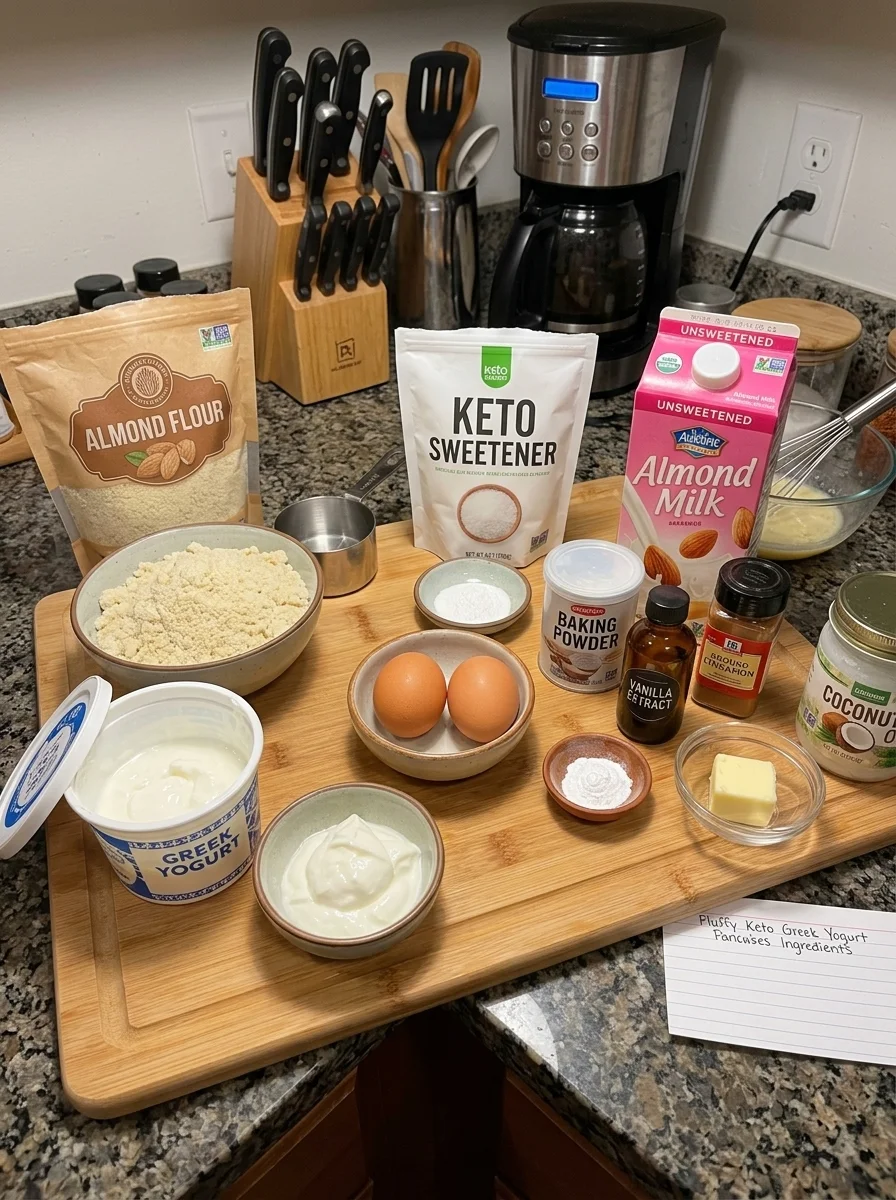
- ½ cup finely ground blanched almond flour
- ¼ cup plain full-fat Greek yogurt, unsweetened
- 2 large eggs
- 1 tablespoon powdered keto sweetener, using a product intended as a cup-for-cup sugar substitute
- ½ teaspoon baking powder
- ½ teaspoon vanilla extract
- ¼ teaspoon ground cinnamon, optional
- 1–2 tablespoons unsweetened almond milk, only if needed
- 1 teaspoon butter or coconut oil, for cooking, divided between batches
Optional Toppings
- A small pat of butter
- Fresh raspberries, strawberries, or blueberries
- Chopped pecans or walnuts
- Sugar-free maple-flavored syrup
- A small spoonful of plain Greek yogurt
Toppings are additional to the basic recipe and change its nutrition.
Ingredient Notes
Choose Fine Almond Flour
Finely ground blanched almond flour is the best starting point for a smooth batter. Almond meal, which may include skins and have a coarser grind, can produce a grainier texture and make the pancakes more fragile.
Measure lightly and level the cup. Do not firmly pack the flour. Brands differ in grind and absorption, so the batter’s texture matters more than automatically adding the full amount of optional milk.
Coconut flour is not a direct substitute. It absorbs much more liquid and would require a different formula.
Use Thick, Plain Greek Yogurt
Choose unsweetened Greek yogurt rather than flavored yogurt. Stir it before measuring, and pour off any obvious pool of separated liquid if necessary.
Full-fat yogurt adds richness. A lower-fat Greek yogurt may work, but its thickness varies by brand and can affect the batter. Regular, thinner yogurt is less predictable in this recipe.
Pick the Right Sweetener
The listed tablespoon assumes a powdered sweetener blend designed to measure similarly to sugar. Pure stevia or pure monk fruit extract is far more concentrated and should not be measured the same way.
Powdered sweetener distributes more readily than coarse granules. Some products have a cooling sensation or noticeable aftertaste, so use one you enjoy. Follow the label when calculating carbohydrates; sweetener blends differ in their ingredients.
Keep the Milk Optional
The eggs and yogurt already supply liquid. Let the batter rest before deciding whether it needs thinning. Add almond milk a teaspoon at a time for better control, up to the suggested amount if necessary.
Use Fresh Baking Powder
Baking powder supplies the main leavening. Baking soda is not a direct replacement at the same amount. If your pancakes have little lift despite careful cooking, check the baking powder’s age and storage conditions.
Equipment
Use a medium mixing bowl, whisk, measuring spoons, nonstick skillet, and a thin, wide spatula. A 2-tablespoon scoop can help you portion the pancakes evenly.
A reliable nonstick surface is particularly useful here. Almond flour pancakes are tender, and a rough or sticky cooking surface can pull them apart during flipping.
How to Make Fluffy Keto Greek Yogurt Pancakes
1. Whisk the Wet Ingredients
Whisk the eggs, Greek yogurt, powdered sweetener, and vanilla in a medium bowl until smooth. Break up any yogurt lumps so you do not need to keep stirring after adding the flour.
There is no need to whip the eggs into a foam. Simply combine the ingredients evenly.
2. Add the Dry Ingredients
Add the almond flour, baking powder, and optional cinnamon. Stir until the mixture is evenly combined, scraping the bottom and sides of the bowl.
The batter may initially look a little loose. Give it time to hydrate before adjusting it.
3. Rest the Batter
Let the batter stand for 3–5 minutes. It should become somewhat thicker as the almond flour absorbs moisture.
Aim for a thick, spoonable consistency that settles slowly after dropping from a spoon. It should spread gently in the pan rather than run outward like a thin crepe batter.
If it remains very stiff, add almond milk a teaspoon at a time. Stir and reassess after each addition. You may not need any milk at all.
4. Warm the Skillet
Place a nonstick skillet over medium-low heat and let it warm evenly. Lightly grease with part of the butter or coconut oil, reserving the remainder for later batches.
If butter immediately turns dark or smokes, the pan is too hot. Remove it from the heat briefly, wipe out the darkened butter, and lower the burner before continuing.
5. Cook a Small Test Pancake
Spoon about 2 tablespoons of batter into the pan. If needed, gently guide it into a small round, approximately 3 inches wide.
Cook for about 2–3 minutes, until the edges look set and the underside is golden. A few bubbles may appear, but do not wait for the entire surface to bubble as it might with wheat pancakes. The top should look less glossy around the edges, and the pancake should lift without smearing.
The first pancake helps you assess the heat and batter. If it browns before it is sturdy enough to lift, lower the heat and allow more cooking time.
6. Flip Carefully
Slide the spatula fully underneath the pancake and turn it in one gentle motion. Cook the second side for about 1–2 minutes, or longer if needed, until the center is set.
Do not press down with the spatula. Pressing compresses the soft center rather than helping it become fluffier.
7. Finish the Batch
Continue with the remaining batter, leaving enough space to get the spatula beneath each pancake. Add a thin film of the remaining cooking fat as needed.
The skillet may get hotter as you work. Adjust the burner down if later pancakes brown faster than the first ones.
8. Serve Warm
Let the pancakes sit briefly on the plate before stacking them. Serve with your chosen toppings while warm.
A modest amount of syrup is usually enough. Too much liquid can soak into the tender pancakes and overwhelm their texture.
Tips for Tender Pancakes with a Little Lift
Keep them small. A broad pancake made from this batter is harder to support during flipping. Small rounds are more reliable.
Wait for a set underside. Trying to flip while the center is still fluid is a common reason for breakage.
Use gentle, steady heat. Almond flour pancakes can brown quickly. A dark exterior does not necessarily mean the middle is ready.
Thin gradually. Excess milk encourages spreading and makes the pancakes harder to handle.
Avoid crowding. Leave space for your spatula and cook in batches when necessary.
Be realistic about fluffiness. These are naturally moist, tender almond-flour pancakes. They will not have the same stretchy, airy structure as a wheat-flour pancake.
Troubleshooting
| Problem | Possible cause | Adjustment |
|---|---|---|
| Pancakes break when flipped | Flipped too early, made too large, or pan sticking | Make smaller rounds, wait until the underside supports lifting, and use a wide spatula. |
| Outside browns while the center stays wet | Heat too high or pancakes too thick | Lower the burner and cook gently for longer. |
| Batter spreads too far | Too much milk or thin yogurt | Stop adding liquid; rest the batter and make a small test pancake. |
| Texture is grainy | Coarse almond meal or insufficient hydration | Use finely ground blanched almond flour and allow the batter to rest. |
| Pancakes seem dense | Inactive baking powder or compressed during cooking | Check the leavening and avoid pressing them with the spatula. |
| Later batches become too dark | Skillet heat builds over time | Lower the heat and briefly move the pan off the burner if necessary. |
Easy Variations
Lemon and Vanilla
Add ½ teaspoon finely grated lemon zest with the wet ingredients and omit the cinnamon. Serve with a few raspberries or a spoonful of yogurt.
Cinnamon Pecan
Use the optional cinnamon and scatter a small amount of finely chopped pecans over the served pancakes. Keeping nuts as a topping avoids making the delicate batter more difficult to flip.
Chocolate Chip
Sprinkle a few mini chocolate chips onto each pancake after portioning the batter into the skillet. Use a modest quantity and check the label if you are limiting carbohydrates. Melted chips can stick, so keep the skillet lightly greased.
Less Sweet
Reduce or omit the sweetener if you prefer a neutral pancake for serving with eggs or other savory breakfast foods. The vanilla and cinnamon can also be omitted.
These variations change the nutrition and have not been separately tested.
Serving Suggestions
For a simple breakfast, divide the pancakes between two plates and add a few berries. For a more substantial meal, serve alongside scrambled eggs or another protein source you enjoy.
A spoonful of Greek yogurt adds a cool contrast, while chopped nuts supply crunch. Butter and sugar-free syrup give a more traditional pancake presentation, but measure toppings if you are tracking calories or carbohydrates.
“Sugar-free” syrup can still contain carbohydrates or ingredients that affect your personal calculations. Use the label for the specific product rather than a generic estimate.
Storage and Reheating
Refrigerator
Refrigerate leftovers promptly in an airtight container and use within 3–4 days. Allow excess steam to escape briefly before packing, but do not leave them sitting out for an extended period.
Place parchment between layers if the surfaces are sticky.
Freezer
Freeze cooled pancakes in a single layer until firm, then transfer to a freezer-safe bag or container. Separate layers with parchment and freeze for up to 2 months for best quality.
Reheating
Warm gently in a lightly greased skillet over low heat, turning carefully. Alternatively, microwave in short intervals until hot throughout. Avoid overheating, which can make the egg-based texture rubbery.
These pancakes are delicate, so a skillet or microwave is generally easier to manage than a pop-up toaster. They may be a little softer after storage than when freshly cooked.
Frequently Asked Questions
Can I use coconut flour instead of almond flour?
Not as a direct swap. Coconut flour absorbs substantially more moisture and requires its own tested proportions.
Can I leave out the eggs?
The eggs provide essential binding in this formula. Removing them or using a substitute may prevent the pancakes from holding together. Use an egg-free recipe developed for that purpose.
Do I need to add all the almond milk?
No. It is only for adjusting an overly thick batter. Rest the batter first, then add small amounts if needed.
Can I make one large pancake?
Small pancakes are easier to flip and cook evenly. A large one is more likely to break because almond flour does not provide gluten structure.
Can I prepare the batter the night before?
For the best lift and most predictable consistency, mix it shortly before cooking. For meal prep, cook the pancakes and refrigerate or freeze the finished portions instead.
Are these high-protein pancakes?
They contain protein from eggs, yogurt, and almonds, but this small recipe is not equivalent to a protein-powder pancake. A reasonable estimate is about 14–16 grams per serving before toppings, depending on brands.
Are they gluten-free?
The basic ingredients can be gluten-free. Check the baking powder, flavorings, and other labels, and use appropriate preparation practices if gluten avoidance is medically necessary.
Why are there fewer bubbles than with regular pancakes?
The batter has a different structure from wheat-flour batter. Look for set edges, a less glossy surface near the perimeter, and an underside that lifts cleanly instead of relying on bubbles alone.
Recipe Card: Fluffy Keto Greek Yogurt Pancakes
Servings: 2
Yield: Approximately 6–8 small pancakes
Preparation: 5 minutes
Rest: 3–5 minutes
Cooking: 10–15 minutes
Total: Approximately 20–25 minutes
Ingredients
- ½ cup finely ground blanched almond flour
- ¼ cup plain full-fat Greek yogurt, unsweetened
- 2 large eggs
- 1 tablespoon powdered keto sweetener, using a sugar-equivalent blend
- ½ teaspoon baking powder
- ½ teaspoon vanilla extract
- ¼ teaspoon ground cinnamon, optional
- 1–2 tablespoons unsweetened almond milk, only if needed
- 1 teaspoon butter or coconut oil, divided, for cooking
Instructions
- Whisk the eggs, yogurt, sweetener, and vanilla until smooth.
- Stir in the almond flour, baking powder, and optional cinnamon. Rest for 3–5 minutes.
- If needed, add almond milk a teaspoon at a time until thick but spoonable.
- Heat a nonstick skillet over medium-low heat and lightly grease with part of the cooking fat.
- Add about 2 tablespoons of batter per pancake. Cook for 2–3 minutes, until the edges set and the underside is golden and sturdy enough to lift.
- Flip carefully and cook for another 1–2 minutes, or until the centers are set. Lower the heat if the surfaces brown too quickly.
- Repeat with the remaining batter, using the remaining cooking fat as needed. Serve warm with optional toppings.
Approximate Nutrition
For half the batch, using typical almond flour, plain full-fat Greek yogurt, a noncaloric sweetener, and the listed cooking fat, estimate:
- Calories: 260–290
- Protein: 14–16 grams
- Net carbohydrates: Approximately 4–6 grams
These are estimates before toppings. Yogurt, flour, sweetener blends, and how much cooking fat remains in the pan affect the result. For more precise tracking, total your ingredient labels and divide by two. The net-carbohydrate estimate assumes a sweetener whose carbohydrates are excluded under your chosen tracking method; other products may increase it.
Notes
- Use finely ground almond flour, not an equal amount of coconut flour.
- Do not automatically add the optional milk.
- Keep pancakes small and flip only when they support their own weight.
- The expanded instructions and estimates have not been independently kitchen-tested.
Final Thoughts
A short batter rest, a dependable nonstick skillet, and patient cooking make the biggest difference with these Greek yogurt pancakes. Keep the rounds small, use added milk sparingly, and give each pancake time to set before flipping. Serve warm with toppings that complement their mild sweetness and tender almond-flour texture.
Print
Fluffy Keto Greek Yogurt Pancakes
Description
Servings: 2
Yield: Approximately 6–8 small pancakes
Preparation: 5 minutes
Rest: 3–5 minutes
Cooking: 10–15 minutes
Total: Approximately 20–25 minutes
Ingredients
- ½ cup finely ground blanched almond flour
- ¼ cup plain full-fat Greek yogurt, unsweetened
- 2 large eggs
- 1 tablespoon powdered keto sweetener, using a sugar-equivalent blend
- ½ teaspoon baking powder
- ½ teaspoon vanilla extract
- ¼ teaspoon ground cinnamon, optional
- 1–2 tablespoons unsweetened almond milk, only if needed
- 1 teaspoon butter or coconut oil, divided, for cooking
Instructions
- Whisk the eggs, yogurt, sweetener, and vanilla until smooth.
- Stir in the almond flour, baking powder, and optional cinnamon. Rest for 3–5 minutes.
- If needed, add almond milk a teaspoon at a time until thick but spoonable.
- Heat a nonstick skillet over medium-low heat and lightly grease with part of the cooking fat.
- Add about 2 tablespoons of batter per pancake. Cook for 2–3 minutes, until the edges set and the underside is golden and sturdy enough to lift.
- Flip carefully and cook for another 1–2 minutes, or until the centers are set. Lower the heat if the surfaces brown too quickly.
- Repeat with the remaining batter, using the remaining cooking fat as needed. Serve warm with optional toppings.