
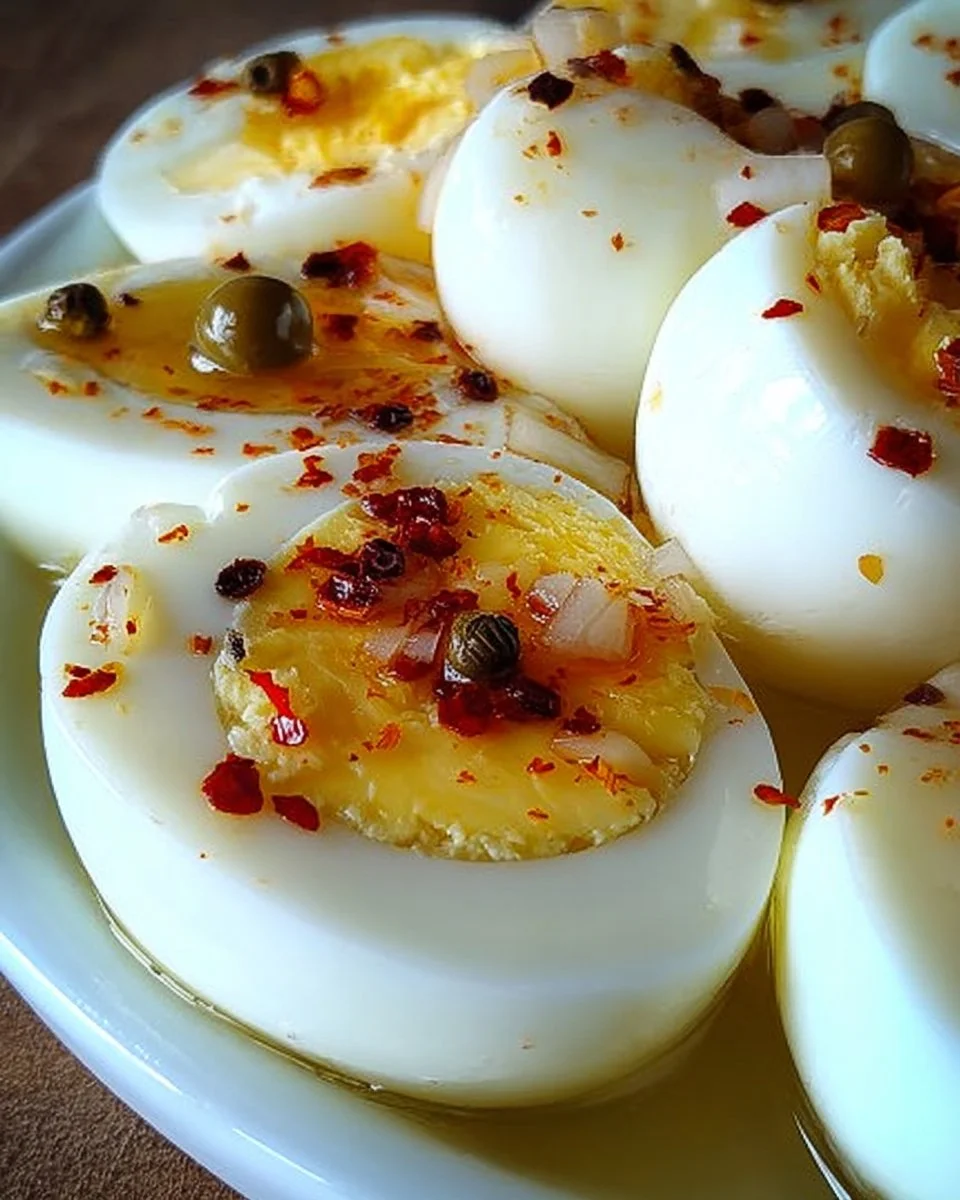
Classic Pickled Eggs
There’s something wonderfully nostalgic about the bright, vibrant hue of a jar full of classic pickled eggs. With their glossy, jewel-like shells and the alluring aroma wafting from the brine, they evoke memories of cozy gatherings, picnics in sun-drenched parks, and family traditions that span generations. When you crack open a jar, the first sight of those beautifully preserved eggs sends a wave of excitement through any table where they land. As you dip a fork into the jar, the soft, creamy texture of the yolk beckons, promising delightful bites of tanginess that combine perfectly with the subtle crunch of spices swimming in the brine.
Celebrating the humble egg, this timeless recipe transforms ordinary hard-boiled eggs into an unforgettable, zesty treat that is as versatile as it is delicious. Each bite tantalizes the taste buds with a perfect balance of vinegar’s sharpness against the comforting creaminess of the yolk. And it gets better—the flavors deepen as they marinate, creating a culinary experience that evolves with each passing day. Whether paired with a crisp salad, served alongside hearty sandwiches, or enjoyed straight from the jar, classic pickled eggs have a way of leaving a memorable impression that will keep you coming back for more.
Why You’ll Love This Classic Pickled Eggs
These classic pickled eggs are not just a dish; they’re an experience. With their vibrant colors and tantalizing flavors, they elevate simple gatherings and potlucks into delightful culinary affairs. Their unique taste offers a blend of sweet, salty, and slightly spicy notes that awaken your palate and brighten any meal. Plus, pickled eggs are incredibly versatile—perfect as a snack, as flavorful additions to salads, or even as a topping on your favorite sandwich.
Their standout feature lies in their adaptability. Add a touch of red pepper flakes for a delightful kick, or swap out the vinegar for an apple cider variation for a sweeter profile. Whether you’re preparing a rustic charcuterie board, a picnic feast, or simply looking for a munchable treat to grace your refrigerator, pickled eggs are sure to impress. This recipe’s simplicity shines through amid its bold flavors, making it a go-to in your array of culinary delights.
Preparation Phase & Tools to Use
To embark on your pickling journey, gathering the right tools makes a world of difference. Here’s what you’ll need:
- A Large Pot: For boiling the eggs, a pot that accommodates all six eggs comfortably will ensure even cooking.
- Mixing Bowl: Use this for cooling the eggs in ice water, which stops the cooking process.
- Saucepan: The saucepan is essential for creating your flavorful brine; a good quality one will distribute heat evenly.
- Glass Jar with a Sealable Lid: A clean, sterilized jar allows the eggs to pickle properly while keeping flavors intact.
- Measuring Cups and Spoons: Accurate measurements guarantee a perfect balance of flavors.
Preparation Tips: Start with fresh eggs for better results. After boiling, plunge them into ice water immediately to prevent overcooking and ensure easy peeling. Keep ingredients organized before starting to streamline the process.
Ingredients for Classic Pickled Eggs
Creating classic pickled eggs requires just a handful of simple ingredients, yet the magic lies in their balance:
- 6 hard-boiled eggs: Use vibrant, fresh eggs for the best color and flavor.
- 1 cup vinegar (white or apple cider): Vinegar acts as the brine base, preserving the eggs and imparting tanginess.
- 1 cup water: Helps balance the acidity of the vinegar, creating a harmonious flavor.
- 1 tablespoon sugar: Adds a hint of sweetness to counteract the vinegar’s sharpness.
- 1 tablespoon salt: Essential for flavor and preservation.
- 1 teaspoon black peppercorns: Infuses a subtle warmth and aromatic spice.
- 1 teaspoon mustard seeds: Adds a gentle bit of crunch and a hint of savory depth.
- 1/2 teaspoon garlic powder: Enriches the brine with a savory note.
- 1/2 teaspoon onion powder: Enhances the umami balance in your brine.
- Optional: red pepper flakes for heat: A pinch adds a delightful kick for those who crave bold flavors.
Feel free to experiment—swap the white vinegar for rice vinegar or even add a bay leaf for extra depth!
How to Make Classic Pickled Eggs
-
Start by hard boiling your eggs: Place the eggs in a large pot, cover them with cold water, and bring it to a rapid boil. Once boiling, cover the pot with a lid, turn off the heat, and let the eggs sit for about 12 minutes. After that, transfer the eggs to an ice water bath to cool for 10 minutes; this stops the cooking process and makes peeling easier.
-
In a medium saucepan, combine the vinegar, water, sugar, salt, black peppercorns, mustard seeds, garlic powder, onion powder, and optional red pepper flakes. Bring to a gentle simmer, stirring until the sugar and salt fully dissolve, filling your kitchen with warm, inviting aromas.
-
Carefully peel the hard-boiled eggs, taking care not to damage them as you go. Place the peeled eggs snugly into the clean jar, layering them if necessary to fit.
-
Pour the warm brine over the eggs, ensuring they are fully submerged. If you have any leftover brine, save it for additional eggs or to adjust the flavor to your liking.
-
Seal the jar tightly and refrigerate for at least 24 hours before digging in. The flavors deepen and intensify the longer they sit, so patience reigns here!
Chef’s Notes & Helpful Tips
-
Make-ahead tips: Feel free to prepare these pickled eggs a week in advance. They improve in flavor as they sit, letting the spices permeate the eggs beautifully.
-
Cooking alternatives: If you’re feeling fancy, try using an air fryer for hard-boiling your eggs; just about 12 minutes at 270°F yields perfectly cooked eggs. Alternatively, roasting them in the oven provides a unique twist!
-
Customization ideas: Don’t hesitate to unleash your creativity! Add sliced jalapeños for heat, fresh dill for herbaceous notes, or substitute some of the water with beet juice for a beautiful pink hue.
Common Mistakes to Avoid
-
Using fresh eggs: Overly fresh eggs can be tricky to peel, leading to frustrating presentation. Opt for eggs that are slightly older for a smoother peeling experience.
-
Letting them sit for too short a time: You may be tempted to dive right in, but rushing the marinating process means you miss out on the full flavor potential. Trust that waiting just a little while will be worth the delicious payoff!
-
Skipping sterilization: Always make sure your jars are clean and sterile. This keeps your pickled eggs safe to eat and extends their shelf life.
What to Serve With Classic Pickled Eggs
Classic pickled eggs shine in a variety of culinary contexts. Consider pairing them with:
- Crisp green salads: The tangy flavor complements the freshness of leafy greens beautifully.
- Pork sandwiches: Add a crunchy, sour element that enhances the savory richness of the meat.
- Charcuterie boards: Their vibrant color and unique taste make them eye-catching and delightful additions.
- Potato salad: Tossing in chopped pickled eggs adds a lovely zing to your classic recipe.
- Deviled eggs: Use pickled eggs for a twist on classic deviled eggs, enhancing your bites with tartness.
- Beer: They make a perfect snack alongside a cold brew, balancing the richness of bar snacks with their acidity.
- Soup: Garnish a hearty soup with sliced pickled eggs for added flavor and texture contrast.
Storage & Reheating Instructions
Storing pickled eggs is simple. Keep them in the refrigerator, where they’ll last for up to four months submerged in their brine. Avoid freezing them, as the texture may suffer when thawed. Since they are served cold, enjoy them straight from the fridge for a refreshing snack. There’s no need to reheat, as their flavor and texture shine just as they are!
Estimated Nutrition Information
The following values are approximate per pickled egg:
- Calories: 70
- Total Fat: 5g
- Saturated Fat: 1g
- Cholesterol: 186mg
- Sodium: 230mg
- Total Carbohydrates: 1g
- Protein: 6g
Please consult a nutritionist for personalized dietary advice.
FAQs
Q: How long do pickled eggs last?
A: When stored correctly in the refrigerator, pickled eggs can last up to four months. Always ensure they remain submerged in their brine for optimum freshness.
Q: Can I reuse the brine for other batches?
A: Yes, you can reuse the brine for another batch of eggs or try pickling vegetables. However, the flavor may diminish with repeated use, so monitor for best results.
Q: What’s the best way to peel hard-boiled eggs?
A: After boiling, placing the eggs in an ice water bath helps loosen the shell, making them easier to peel. Gently crack the shell all around before removing it for a smoother experience.
Q: Can I use different spices?
A: Absolutely! Customize the flavor of your pickled eggs by adding your favorite spices or herbs, like dill, coriander, or bay leaves, to the brine for a unique twist.
Q: Will the eggs become too sour after sitting for a long time?
A: While the flavor intensifies with time, pickled eggs do not usually become excessively sour. However, try to use them within the recommended storage lifespan for the best taste.
Conclusion
In the world of culinary delights, classic pickled eggs stand out as a simple yet profoundly rewarding recipe. The joy of biting into a tangy, flavorful egg is irresistible, with each forkful evoking the warmth of home and good company. This recipe’s straightforward approach allows for endless experimentation, ensuring you’ll never tire of their delightful crunch and creamy texture. Gather your ingredients, follow the steps, and soon you’ll have a jar bursting with colorful, pickled goodness, ready to elevate your meals and impress your family and friends. Embrace the art of pickling and enjoy this timeless treat that deserves a special place on your dining table. Happy pickling!
Print
Classic Pickled Eggs
- Total Time: 27 minutes
- Yield: 6 servings 1x
- Diet: Vegetarian
Description
A timeless recipe that transforms ordinary hard-boiled eggs into tangy, flavorful pickled treats, perfect for snacks or as savory additions to meals.
Ingredients
- 6 hard-boiled eggs
- 1 cup vinegar (white or apple cider)
- 1 cup water
- 1 tablespoon sugar
- 1 tablespoon salt
- 1 teaspoon black peppercorns
- 1 teaspoon mustard seeds
- 1/2 teaspoon garlic powder
- 1/2 teaspoon onion powder
- Optional: red pepper flakes for heat
Instructions
- Start by hard boiling your eggs: Place the eggs in a large pot, cover them with cold water, and bring it to a rapid boil. Once boiling, cover the pot with a lid, turn off the heat, and let the eggs sit for about 12 minutes. Transfer the eggs to an ice water bath to cool for 10 minutes.
- In a medium saucepan, combine the vinegar, water, sugar, salt, black peppercorns, mustard seeds, garlic powder, onion powder, and optional red pepper flakes. Bring to a gentle simmer, stirring until the sugar and salt fully dissolve.
- Carefully peel the hard-boiled eggs, taking care not to damage them.
- Place the peeled eggs snugly into a clean jar, layering them if necessary.
- Pour the warm brine over the eggs, ensuring they are fully submerged.
- Seal the jar tightly and refrigerate for at least 24 hours before serving.
Notes
For best flavor, prepare these pickled eggs a week in advance. They improve as they sit, allowing spices to permeate the eggs.
- Prep Time: 15 minutes
- Cook Time: 12 minutes
- Category: Snack
- Method: Pickling
- Cuisine: American
Nutrition
- Serving Size: 1 egg
- Calories: 70
- Sugar: 1g
- Sodium: 230mg
- Fat: 5g
- Saturated Fat: 1g
- Unsaturated Fat: 0g
- Trans Fat: 0g
- Carbohydrates: 1g
- Fiber: 0g
- Protein: 6g
- Cholesterol: 186mg
Keywords: pickled eggs, appetizers, snacks, preservation, tangy